
Rising Damp Treatment and Remediation: The best fix for Melbourne homes
Fixing rising damp at a newly purchased Melbourne property
Problem: Rising damp in internal brickwork
Schaefer Waterproofing was engaged to address significant rising damp affecting the internal walls of a residential unit in Reservoir. Rising damp occurs when groundwater rises up through brickwork and mortar via capillary action, leading to structural damage, peeling paint, and unhealthy living conditions.
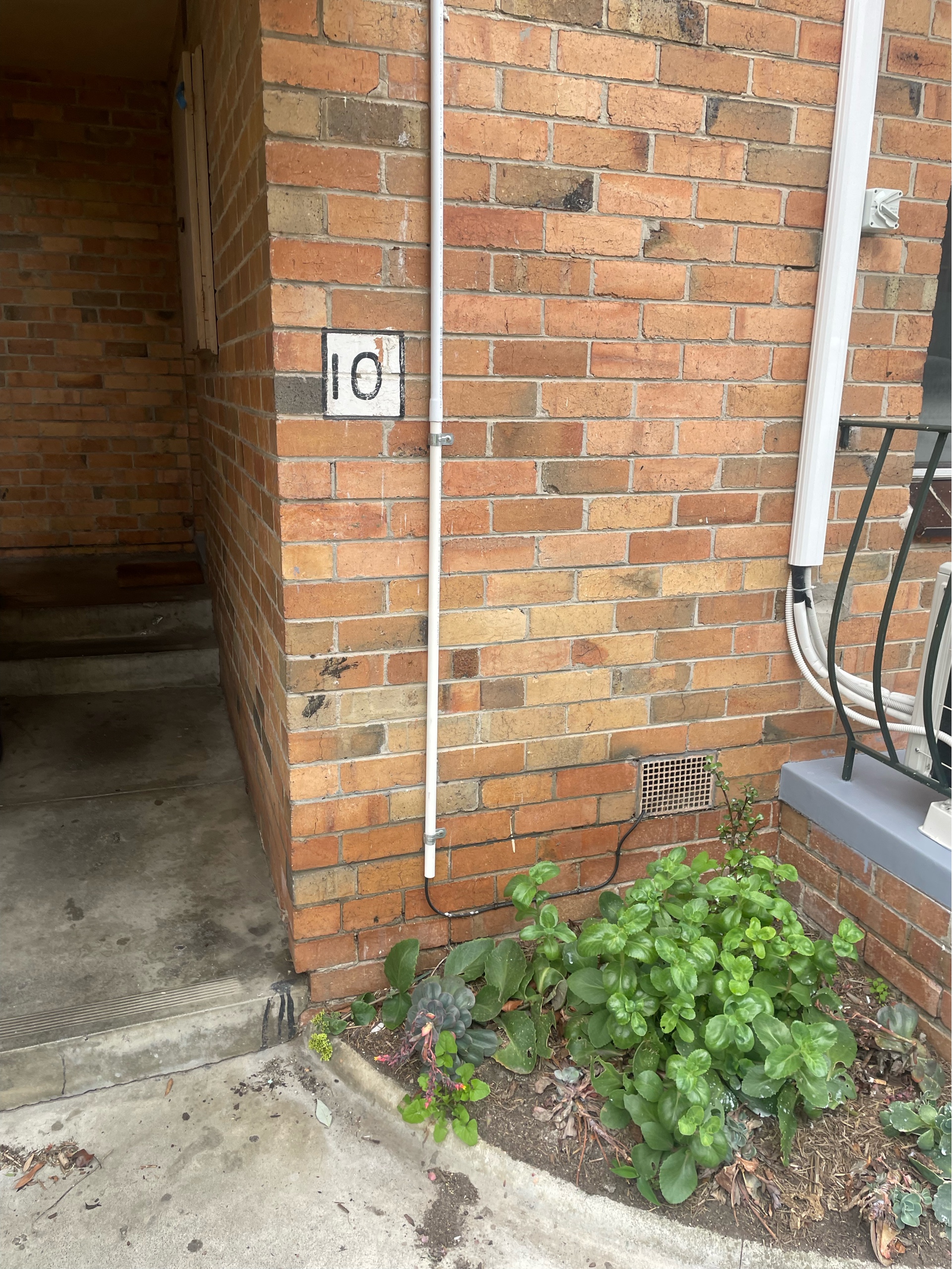
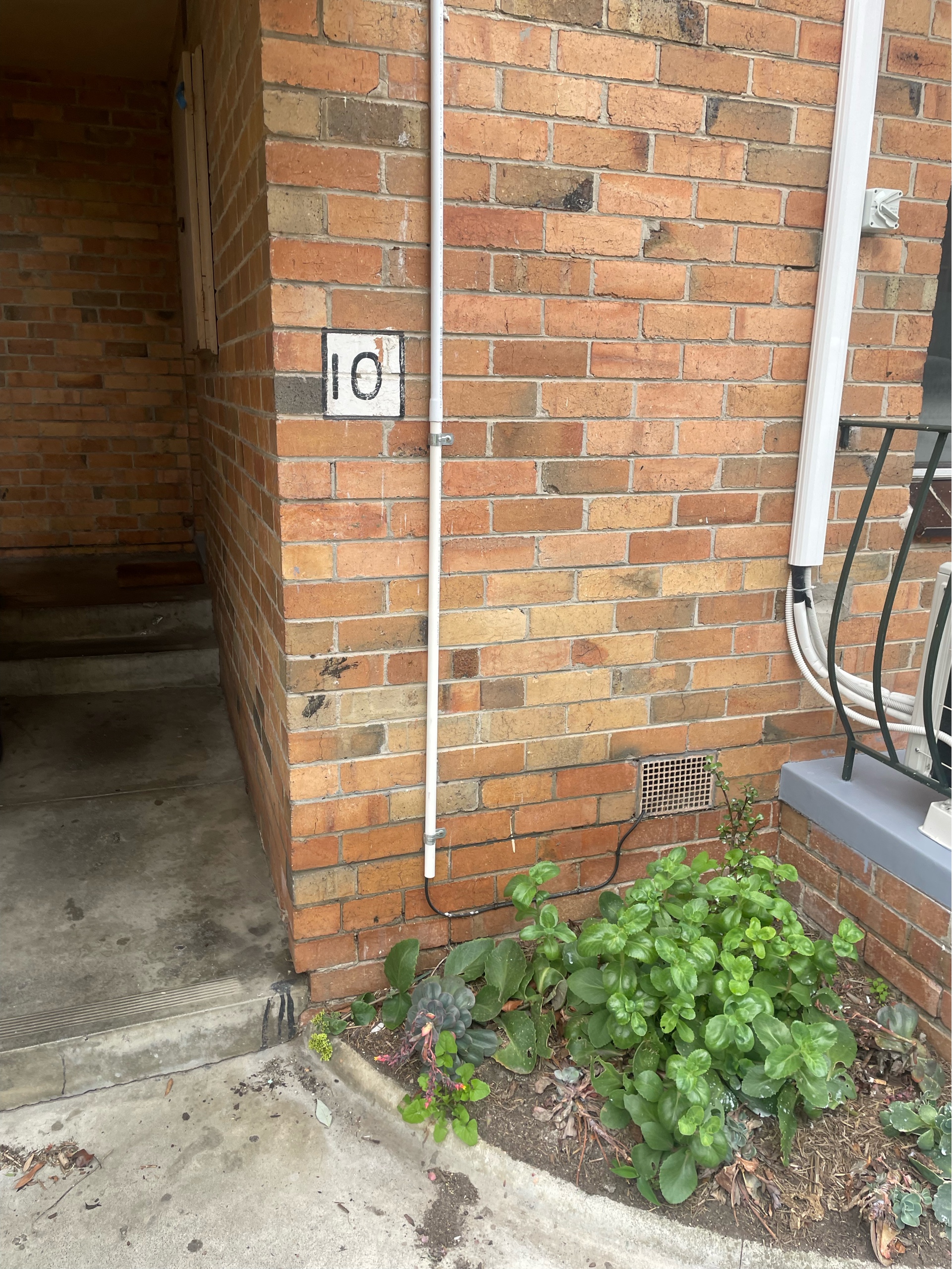
During the initial site inspection, high levels of moisture consistent with rising damp were also observed along the property’s external walls. To permanently stop the water ingress on the internal walls, we deployed a comprehensive negative-side injection strategy along 37 lineal meters of affected brickwork.
Symptoms identified
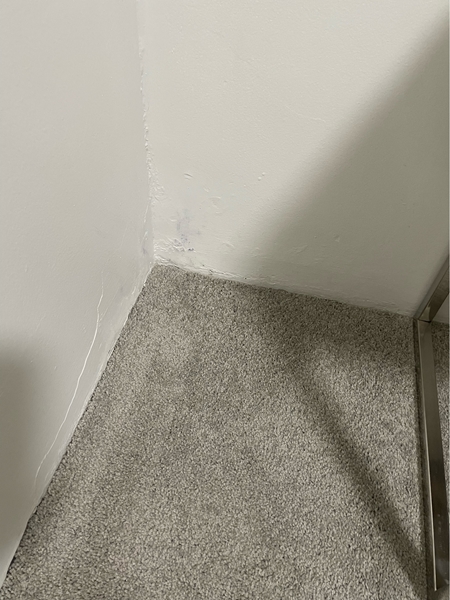
- Surface degradation: Bubbling paint and debonding internal render caused by trapped moisture, accompanied by a noticeable damp, musty smell.
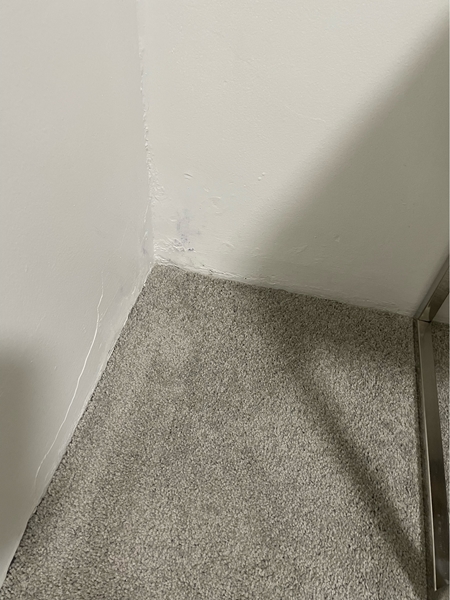
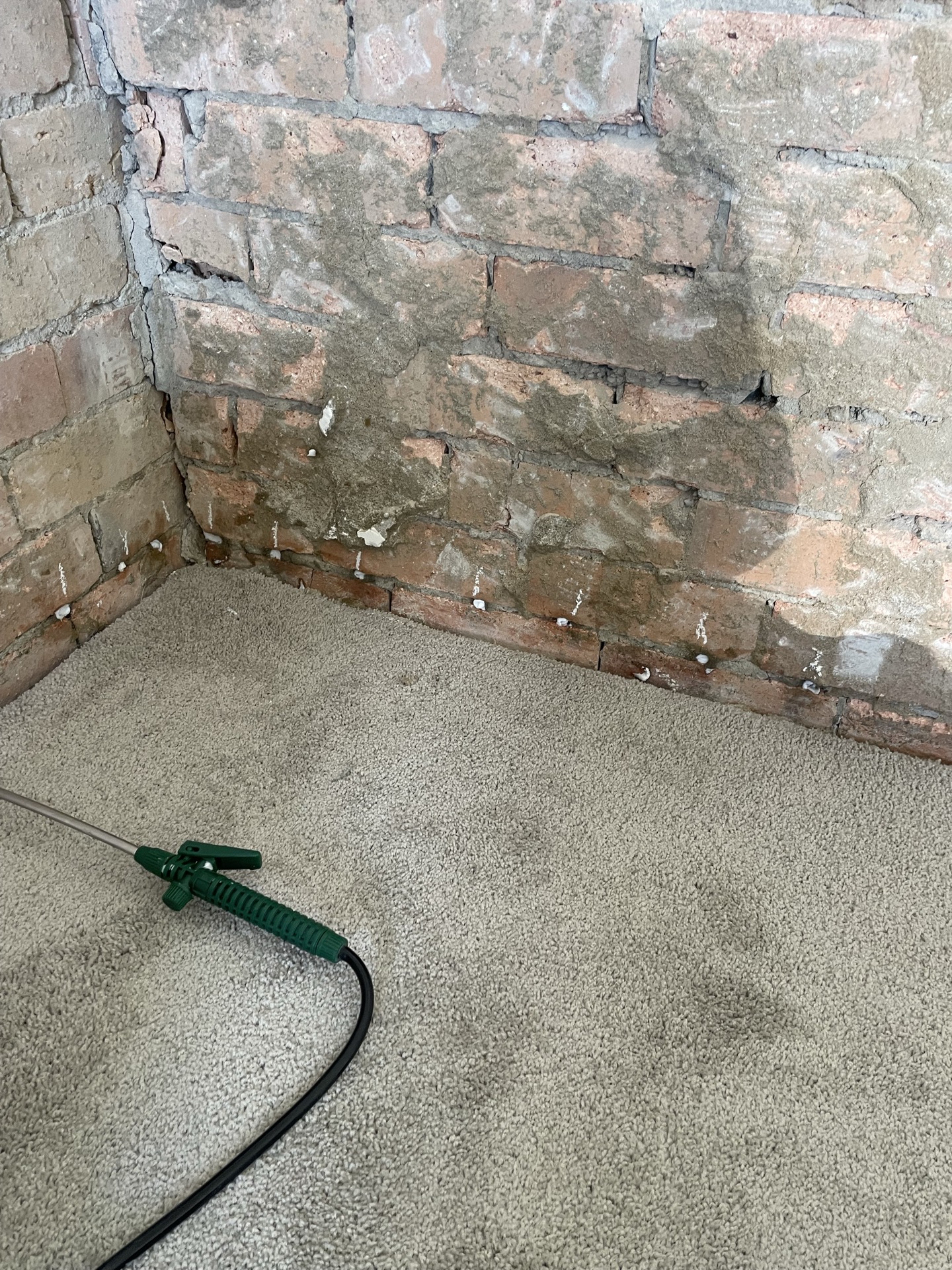
- High moisture readings: Initial site inspections recorded significantly elevated moisture levels using a moisture meter on both the internal render and the property’s external brickwork.
Urgency factors
- Rental readiness:The client had very recently purchased the property and required rapid, permanent remediation to safely list the space on the rental market as soon as possible.
- Asset preservation: Immediate intervention was necessary to halt the ongoing deterioration of the interior walls and protect the structural integrity of the newly acquired investment before tenants moved in.
Our Remediation Process
To ensure a permanent fix and seamless client experience, our waterproofing technicians managed the rising damp treatment end-to-end over two days.
Recommended solution
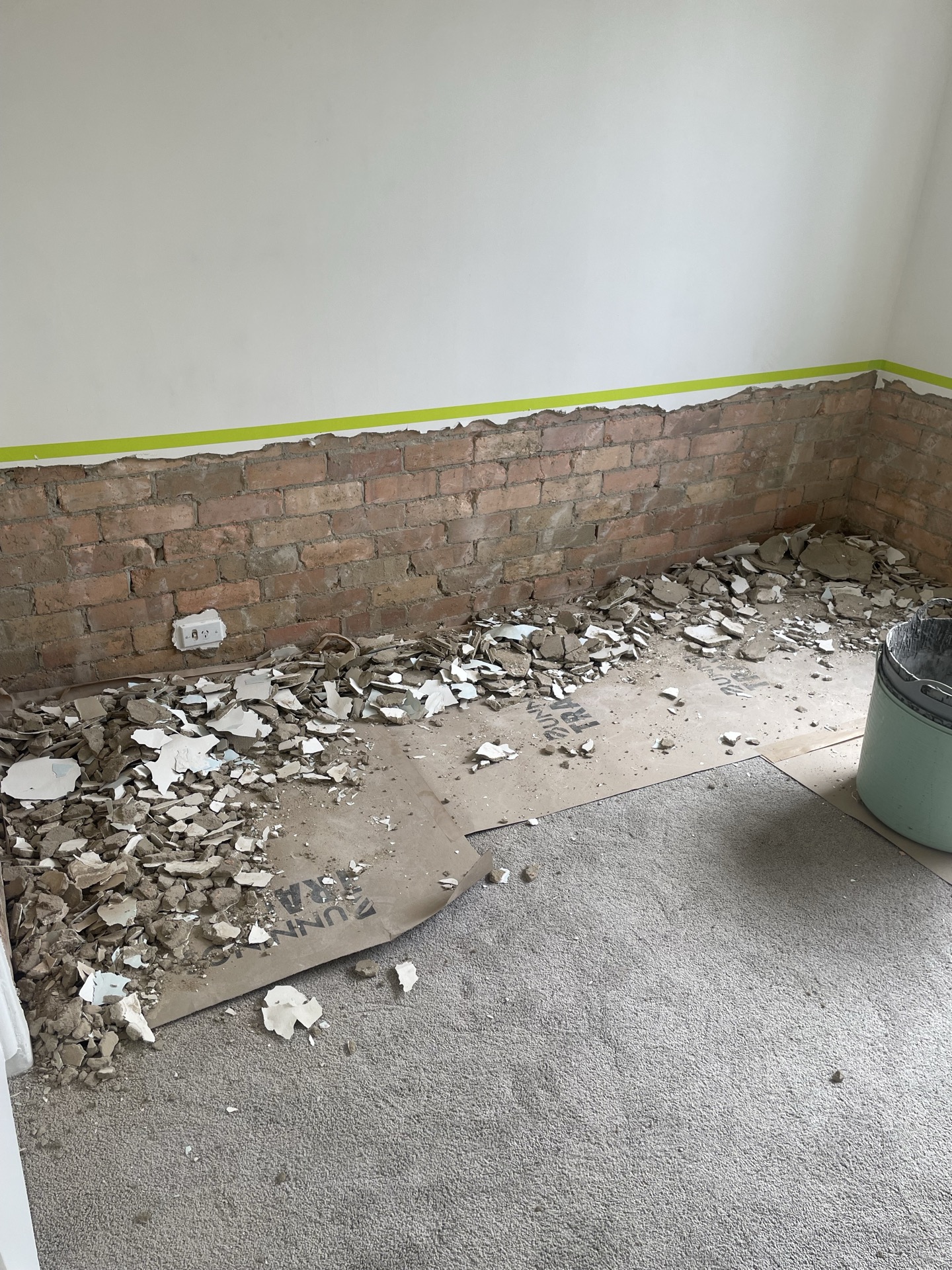
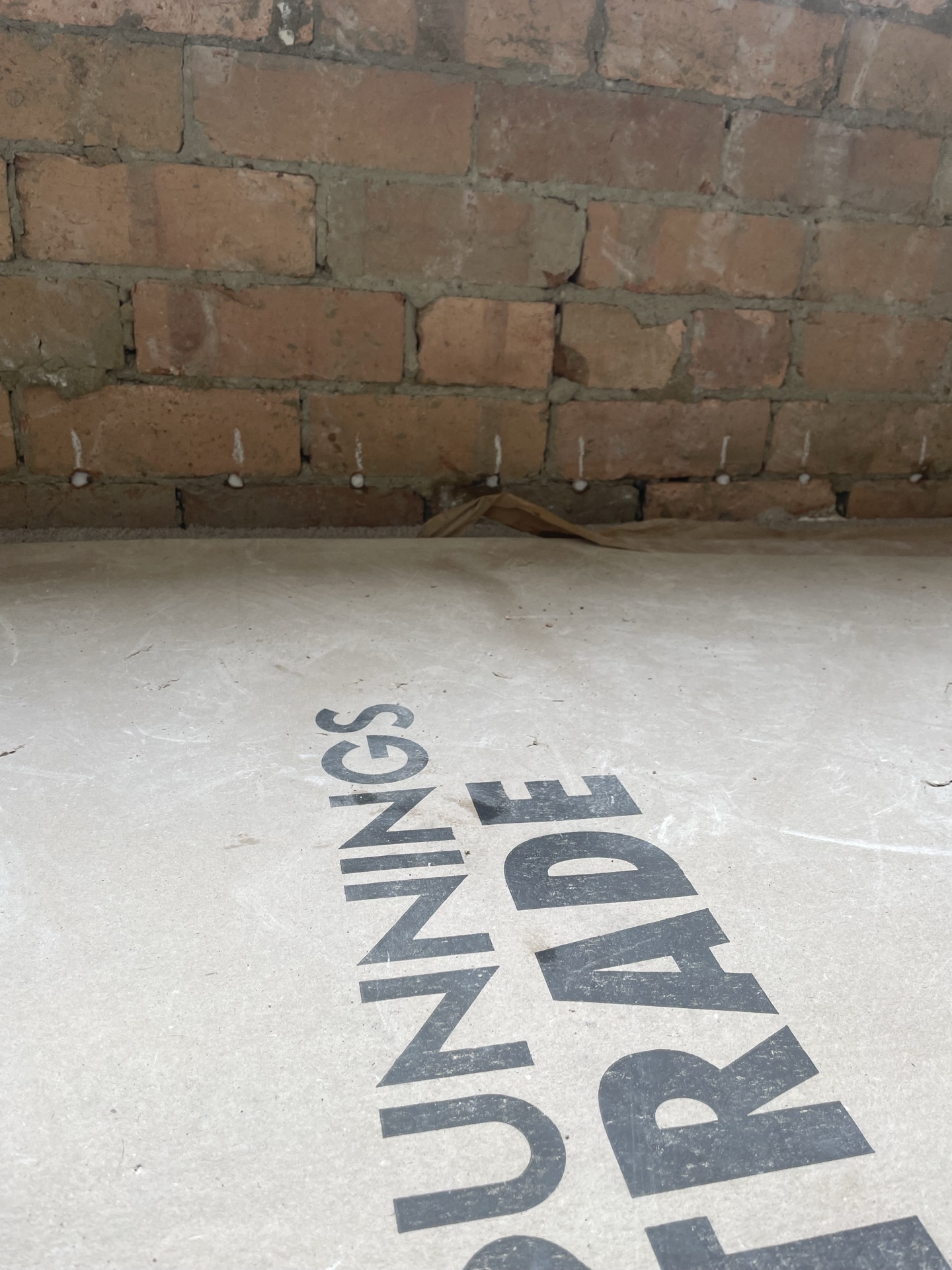
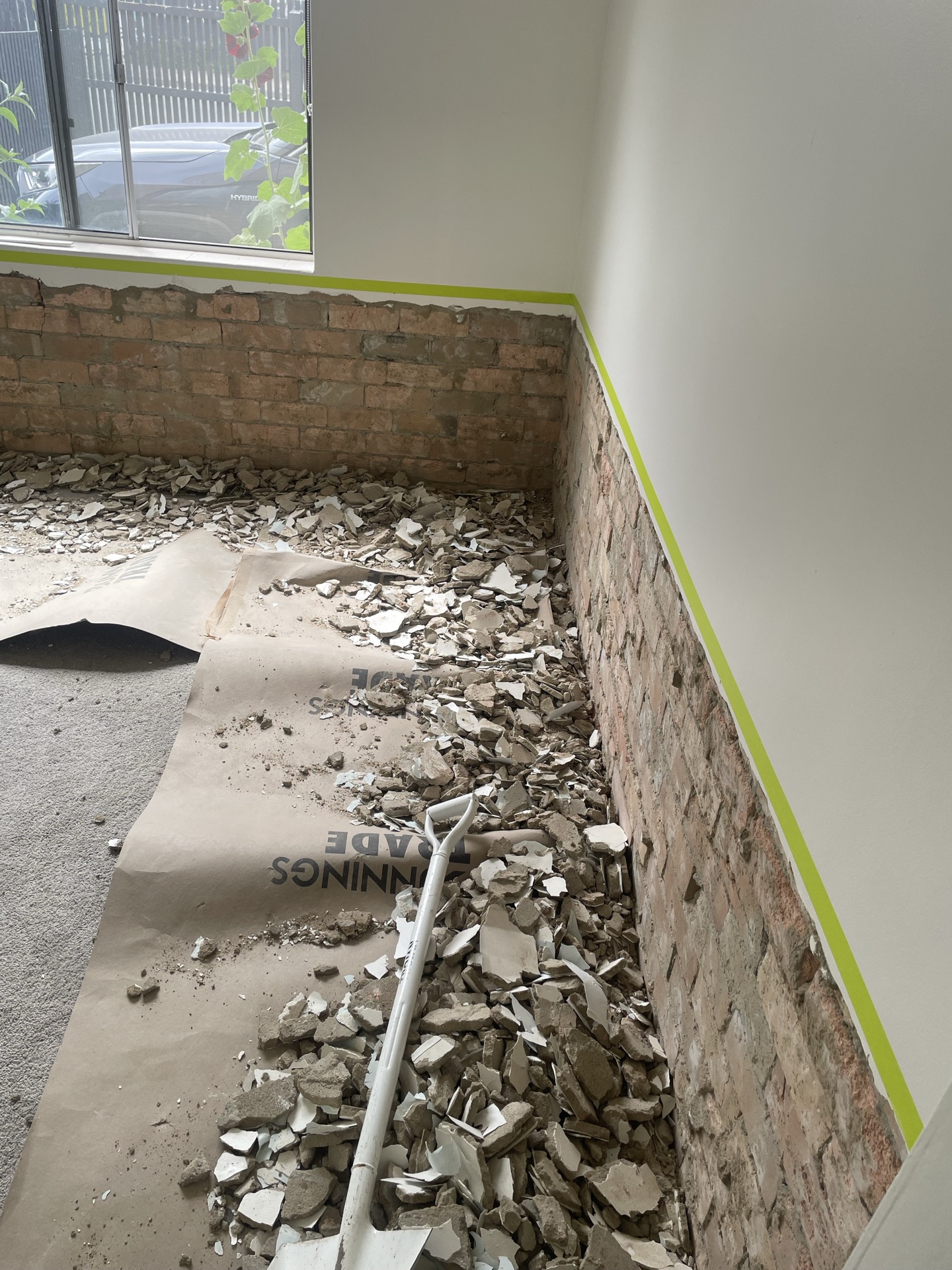
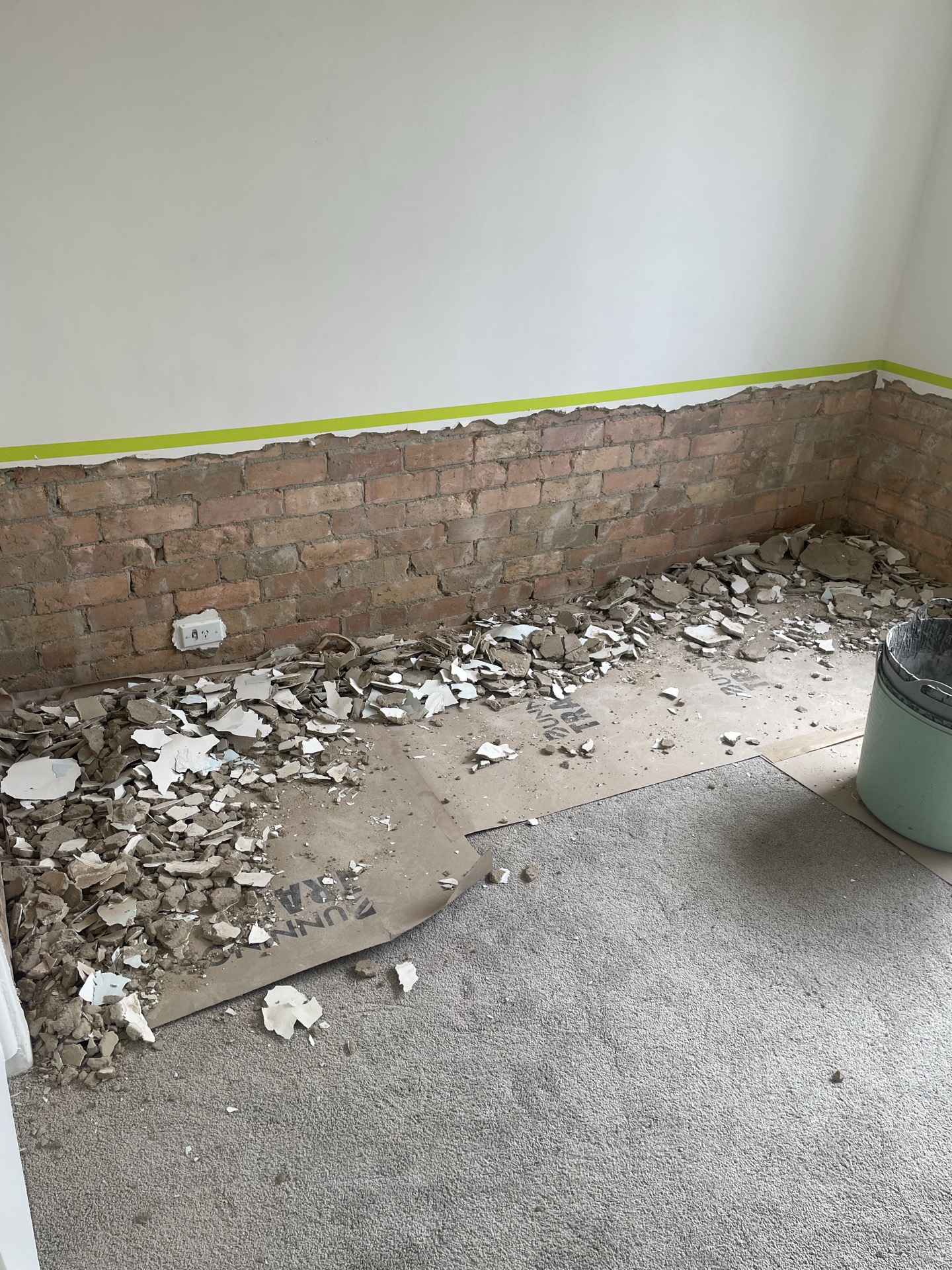
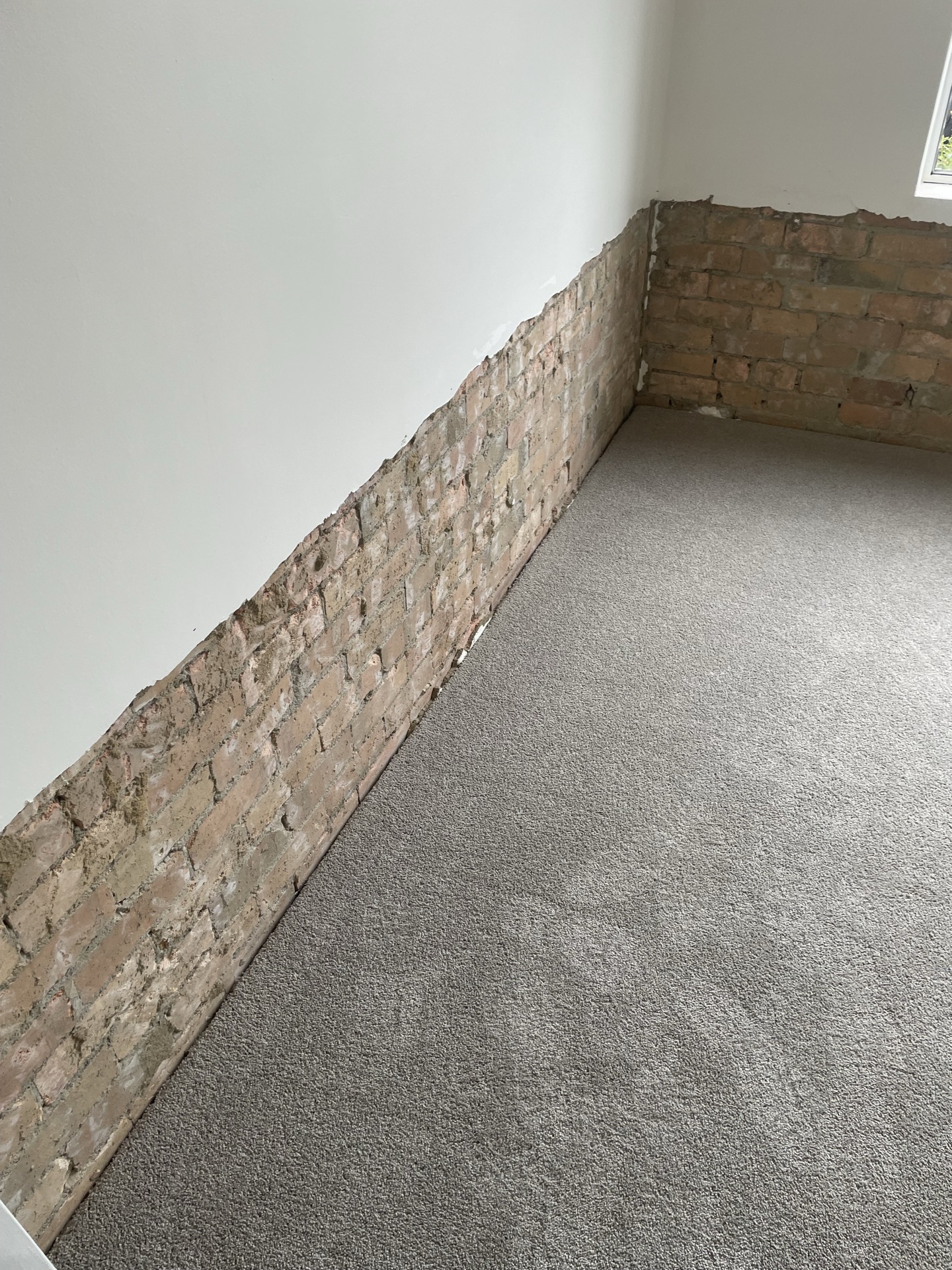
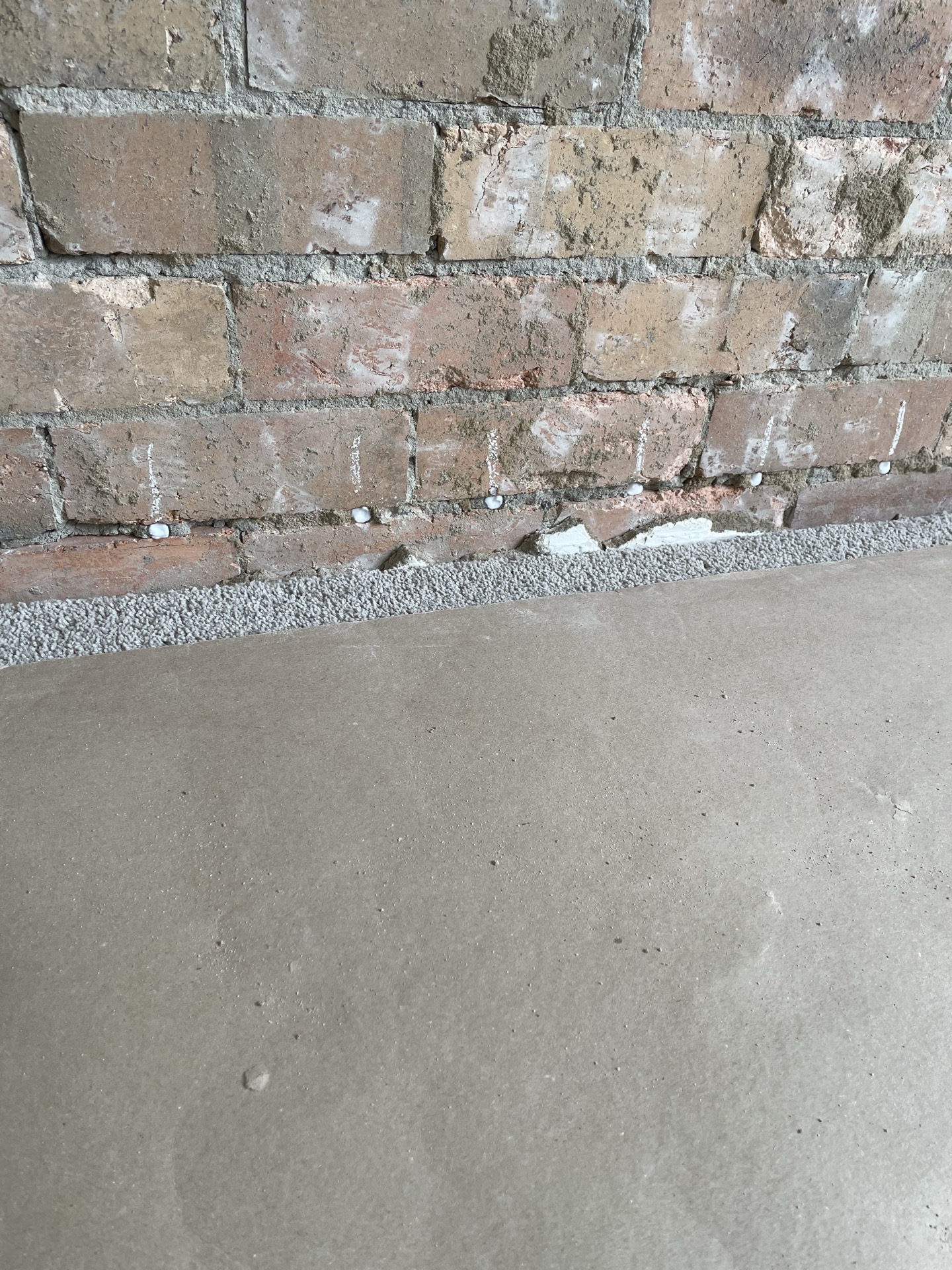
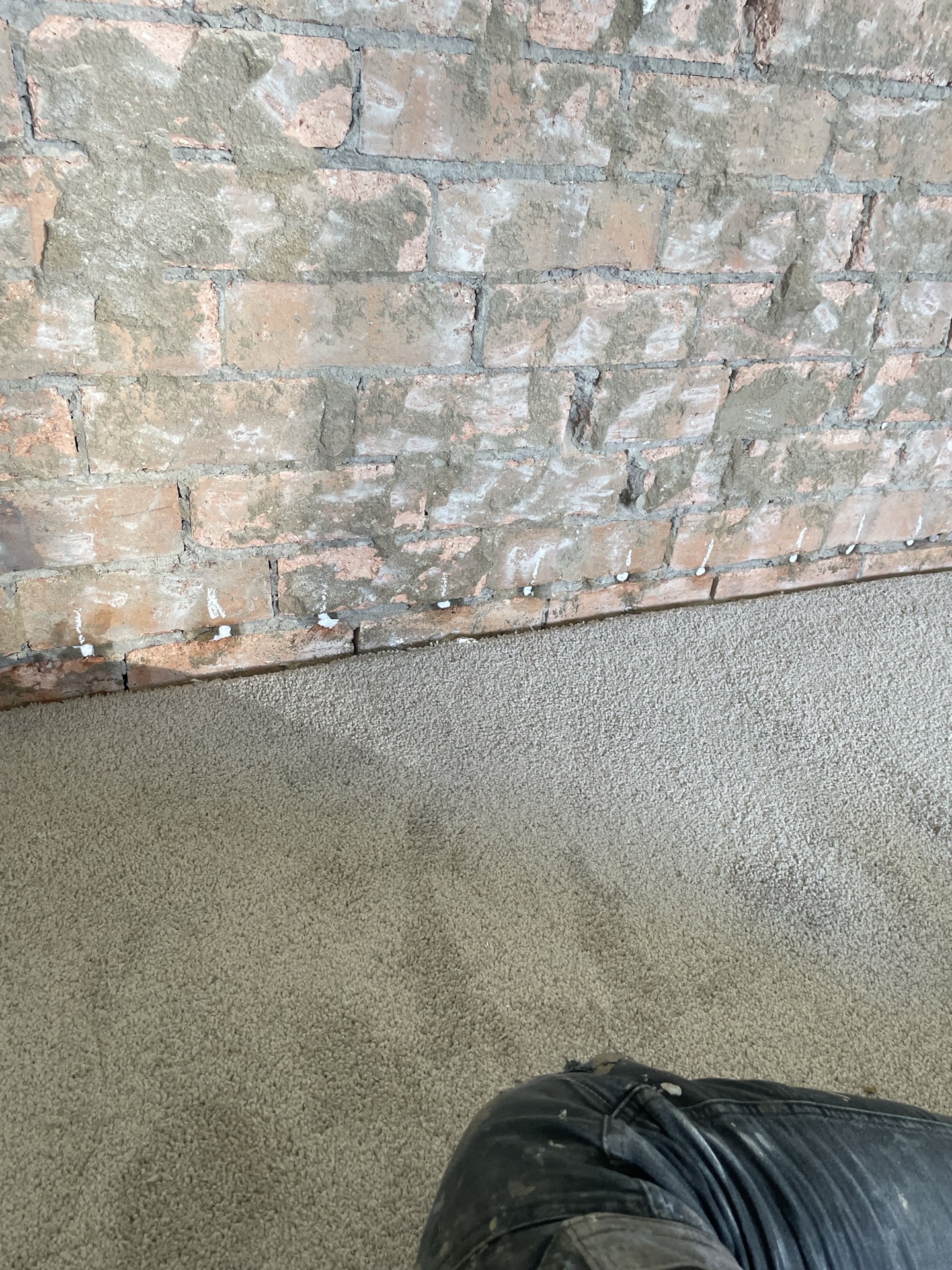
Protect the floors and remove the damaged lower wall render to expose the bare brickwork. Drill into the mortar joints and inject a specialised damp-proofing cream twice to ensure it fully absorbs.
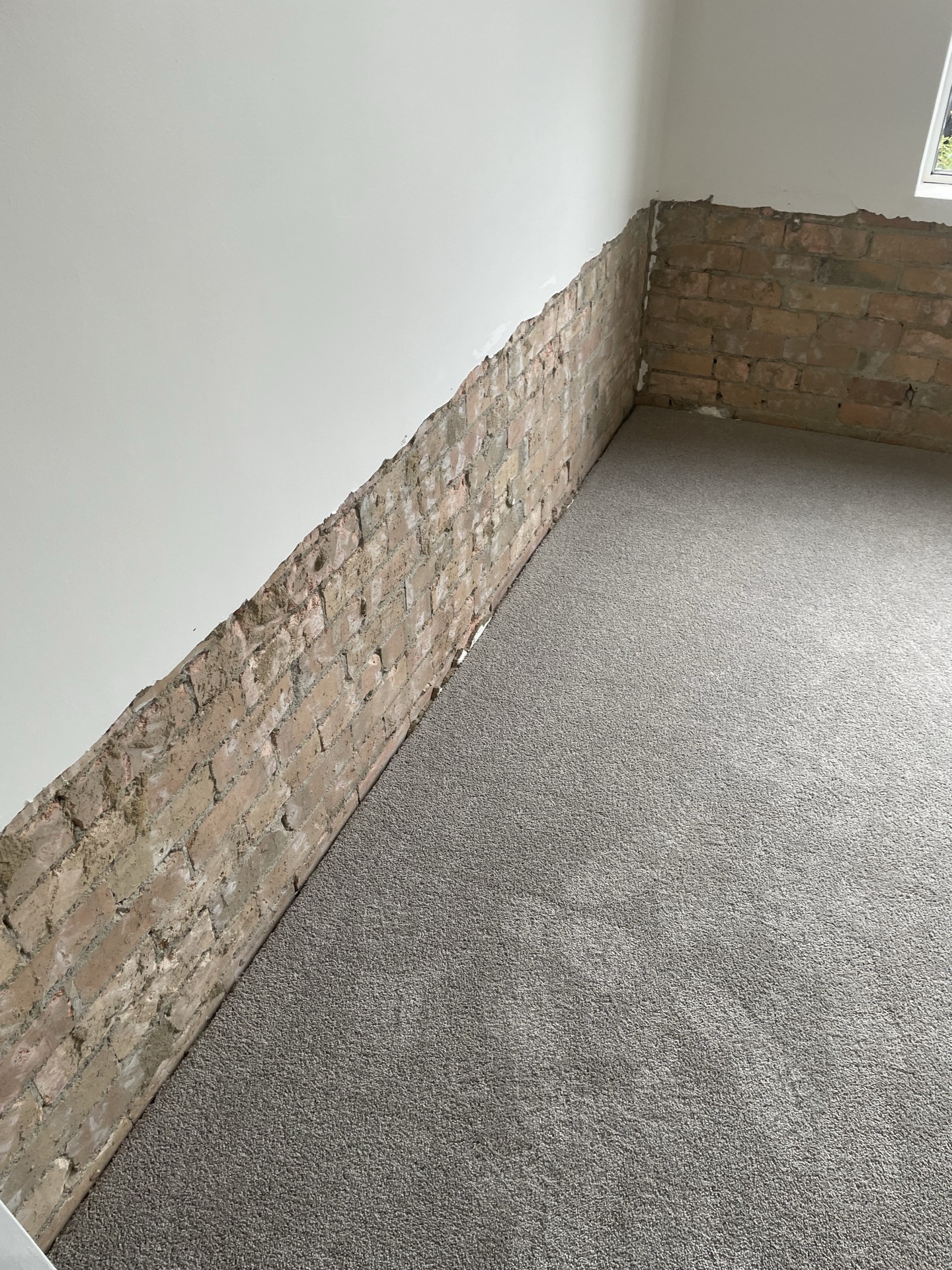
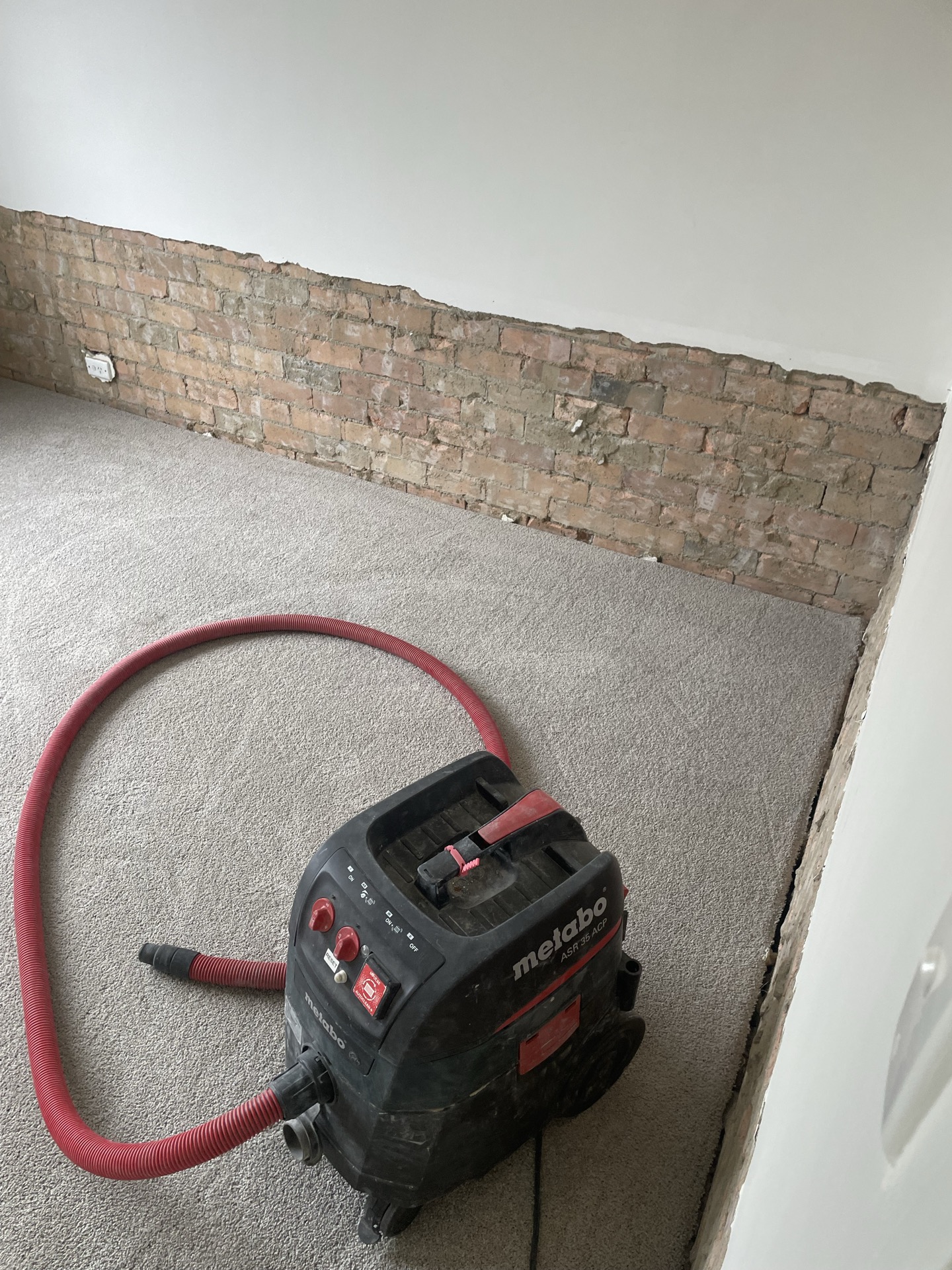
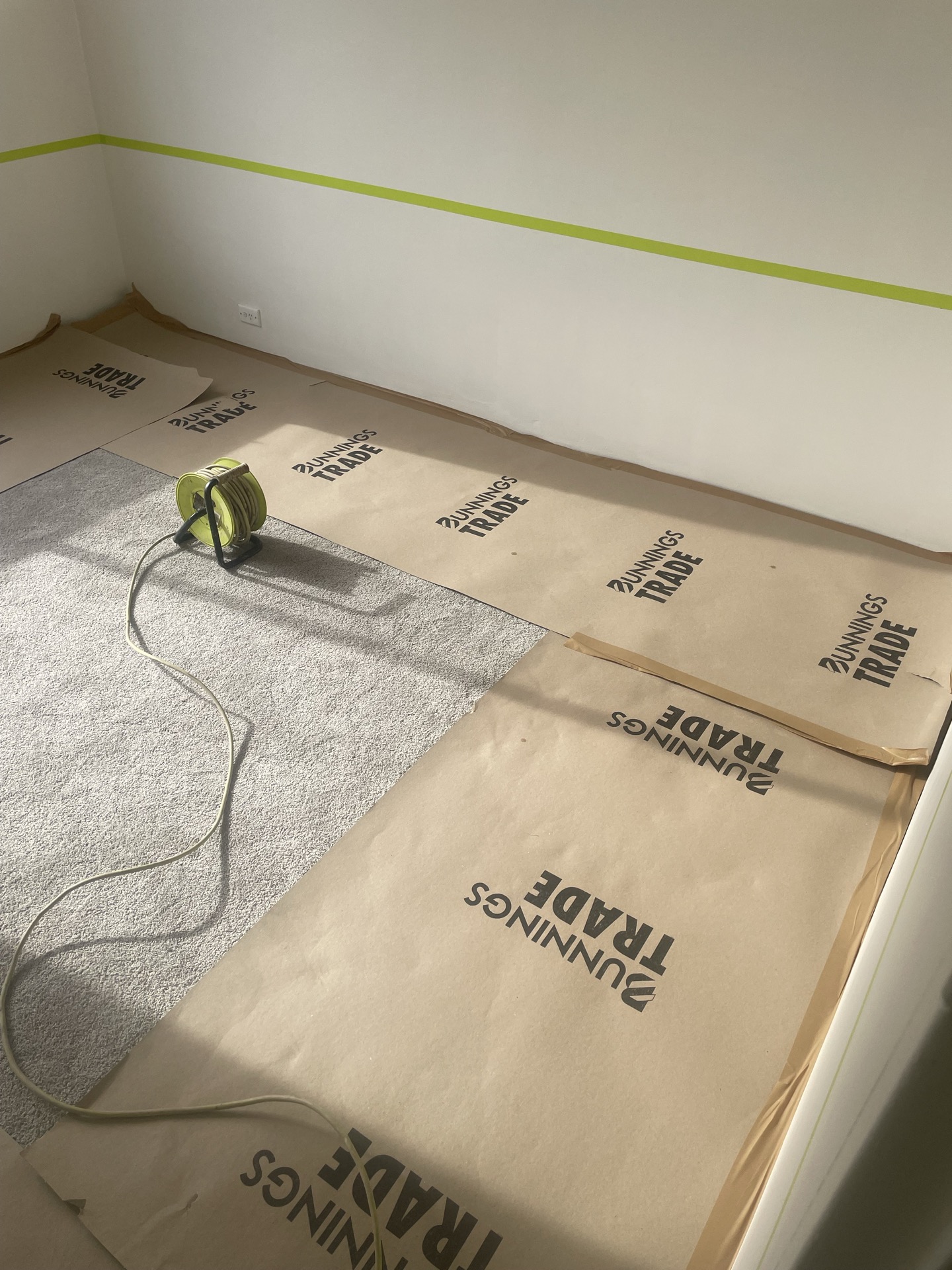
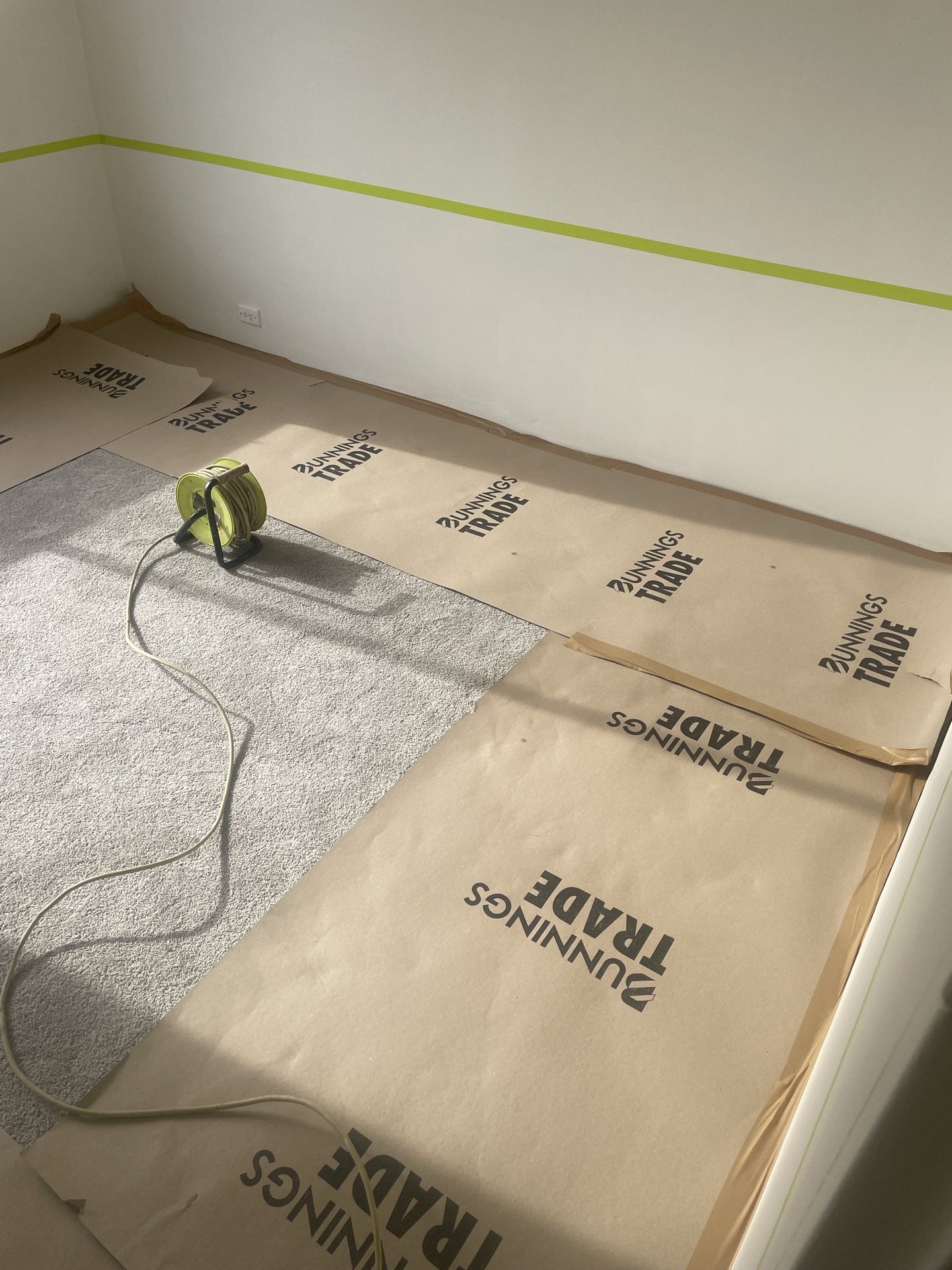
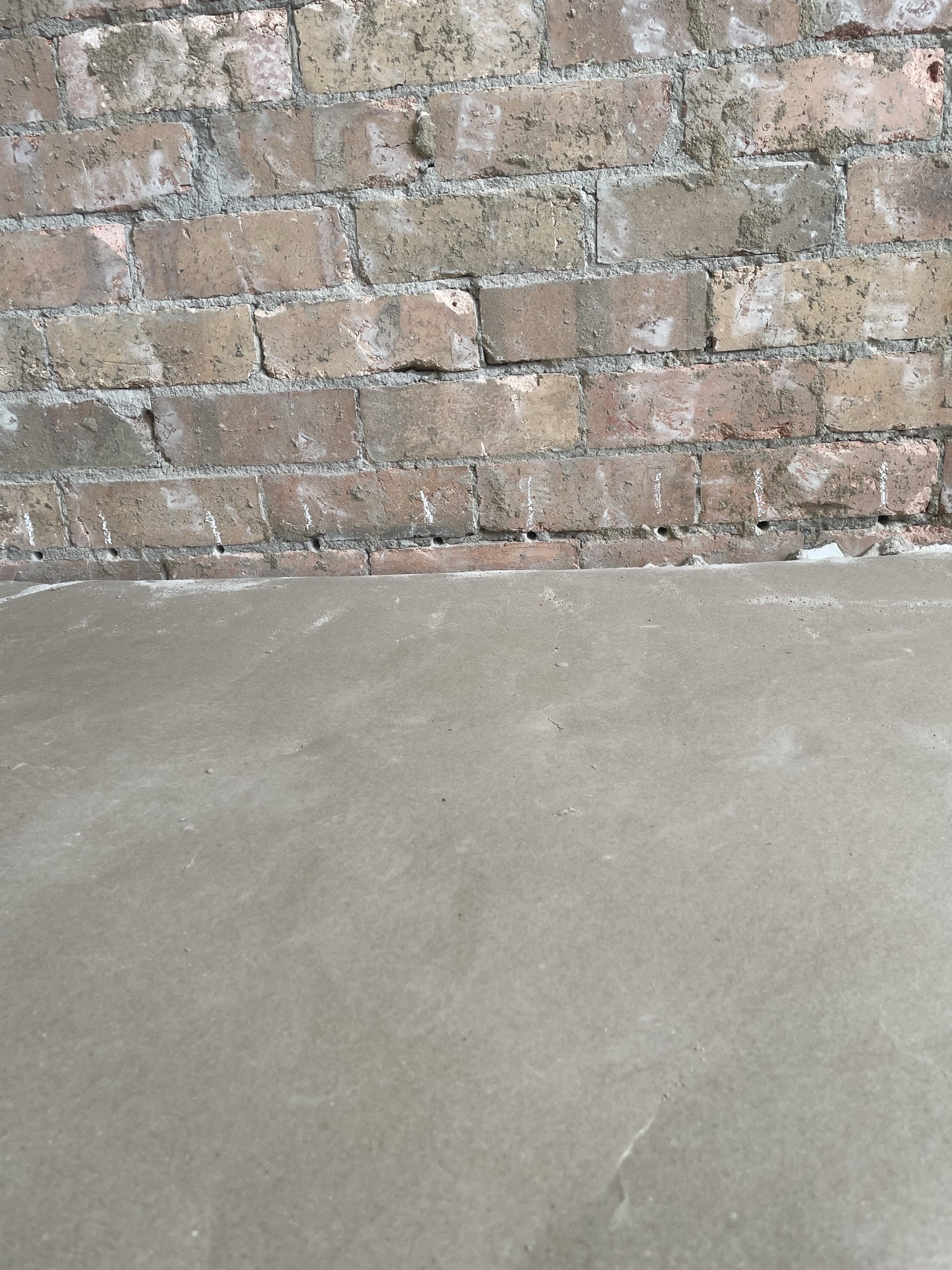
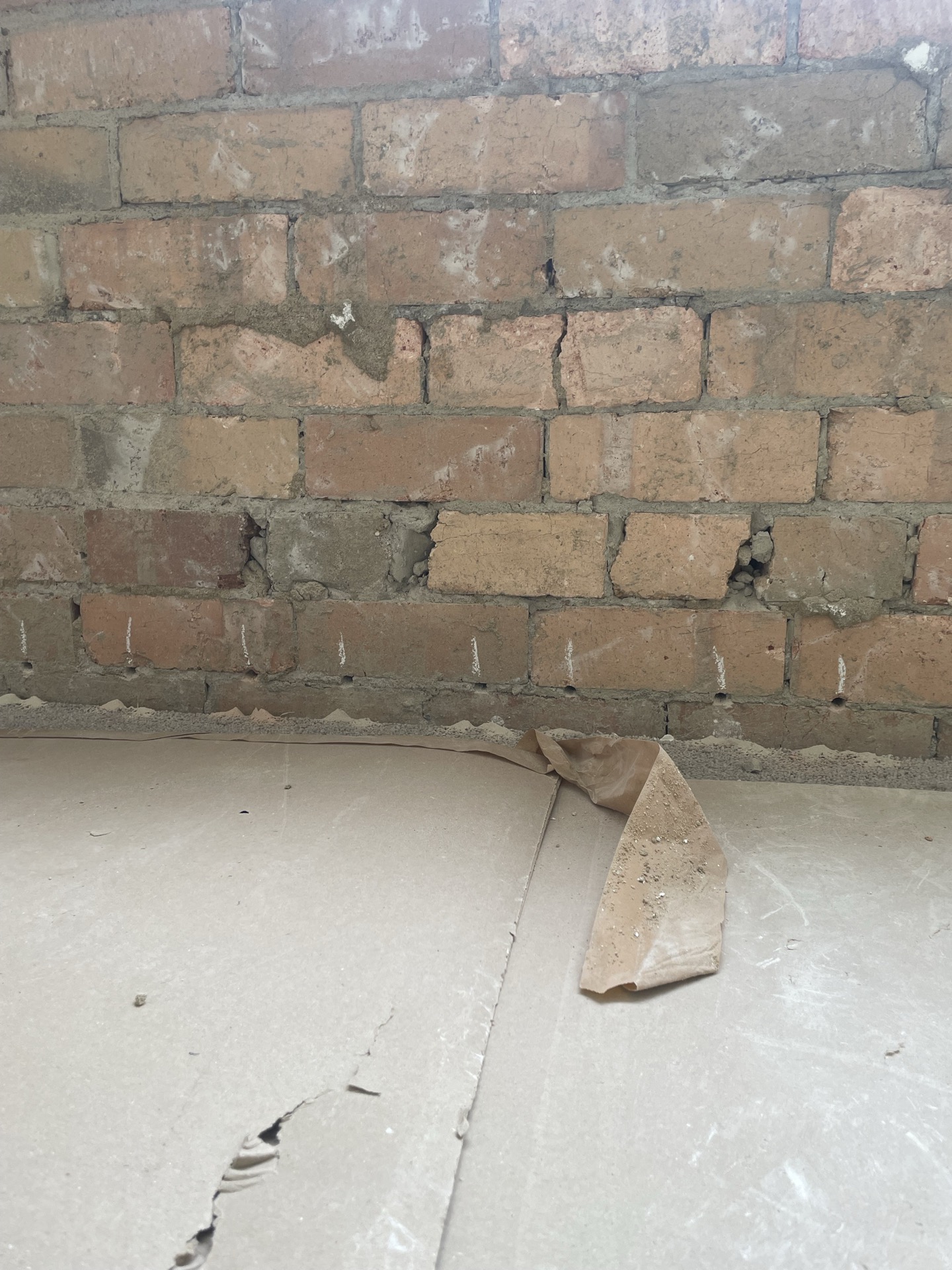
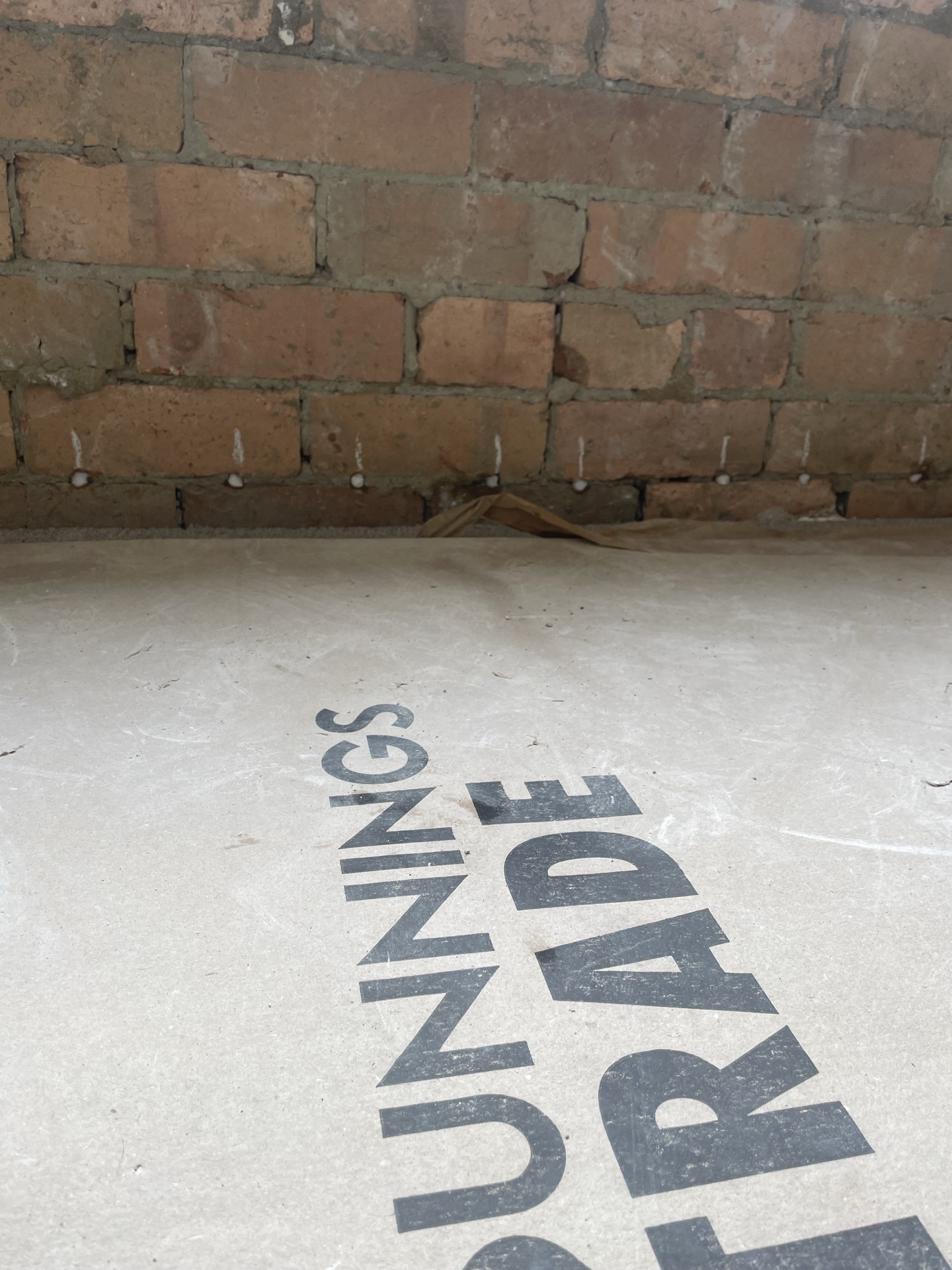
- Site Preparation & Protection: Before any heavy work began, we installed heavy-duty floor and carpet protection throughout the interior working zones to safeguard the property. A skip bin was positioned onsite for immediate waste management.
- Demolition & Render Removal: To access the affected brickwork, our team utilized jackhammers to remove the existing internal plaster and wall render up to 700mm from the finished floor level along the 37 lineal meters of compromised wall. This noisy work was strictly limited to standard working hours to minimise disruption to neighbours.
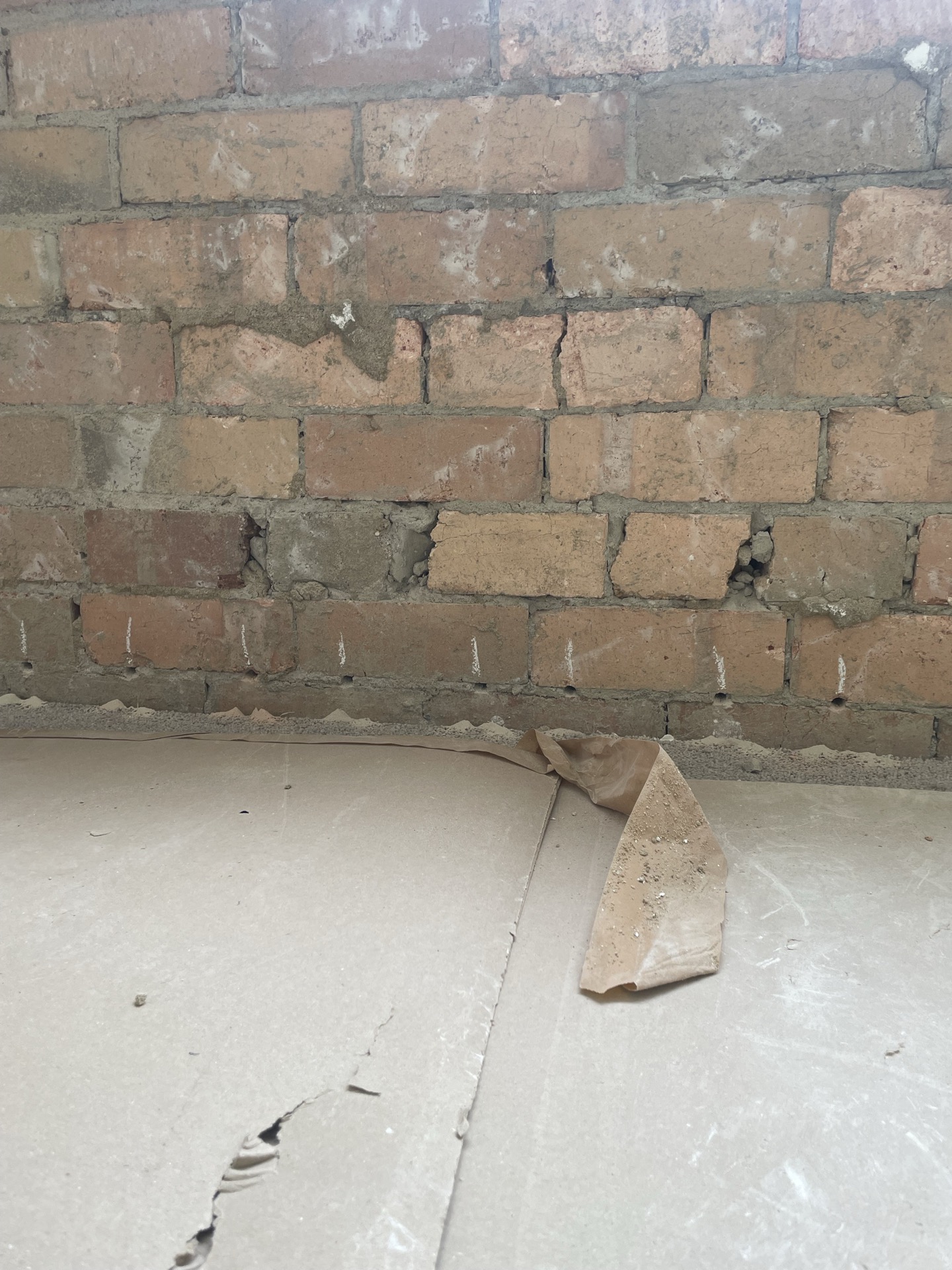
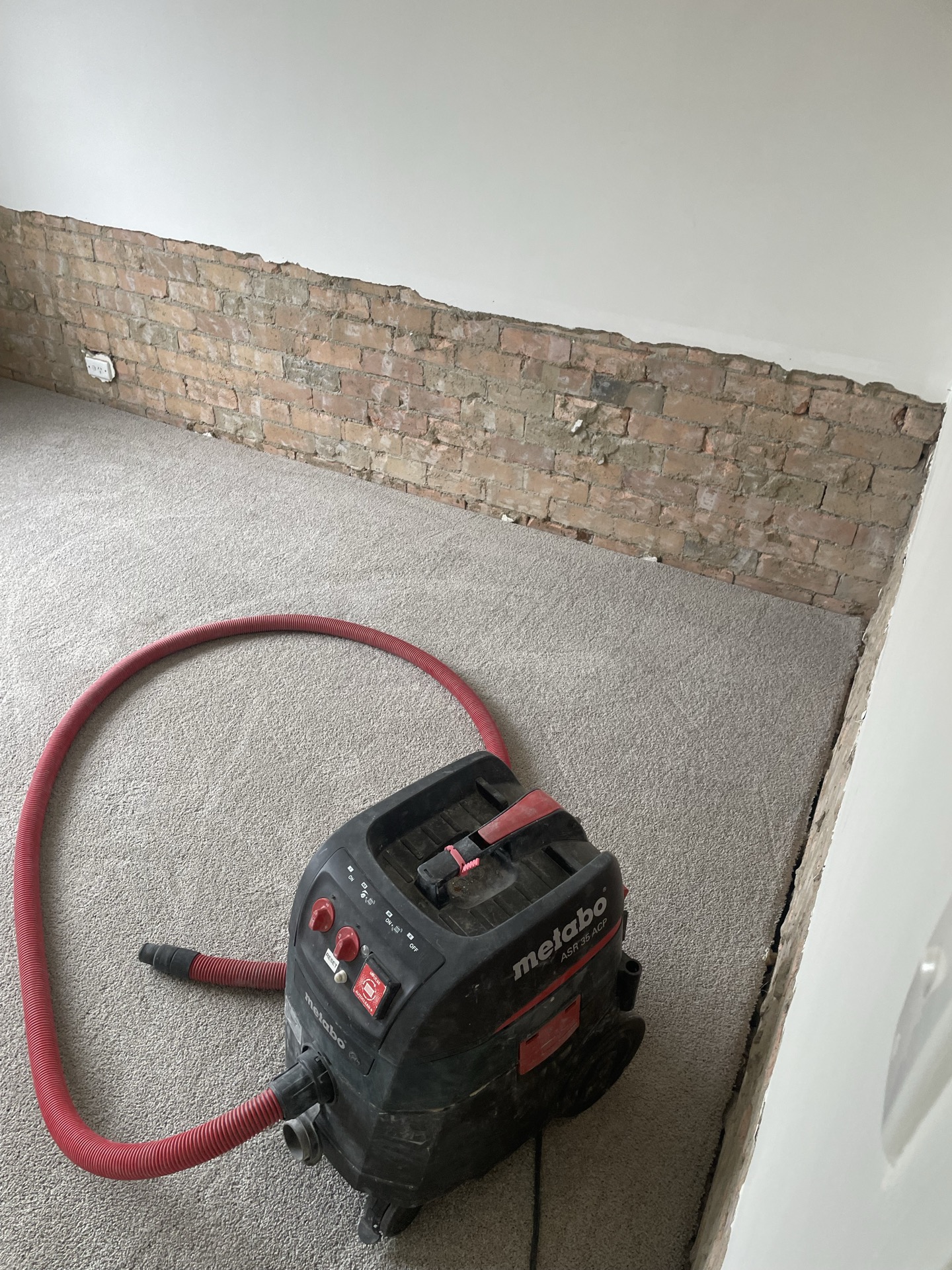
- Precision Drilling & Preparation: We drilled a series of injection holes directly into the mortar joints of the exposed brickwork, strictly adhering to the damp proof course (DPC) manufacturer’s specifications. Every hole was thoroughly cleaned and vacuumed to remove dust and contaminants, ensuring the waterproofing cream could penetrate effectively.
- Damp Proof Course (DPC) Injection: We carried out the primary injection of specialised Tech-Dry damp proof course cream into the prepared mortar joints. To guarantee complete saturation and a flawless waterproof barrier, a second top-up injection was administered.
Quality Assurance and Compliance
Quality control is critical for long-lasting waterproofing. Every stage of this rising damp remediation was documented with photographic evidence via Complibuild compliance software for complete transparency. All common areas were cleaned and cleared of debris prior to final sign-off.
FAQs
How long does rising damp remediation take?
For a standard internal wall injection like this 37-lineal-meter project, the process takes around two to three days. This includes floor protection setup, render removal, mortar drilling, and the dual-injection of the damp-proof course (DPC) cream.
Do I have to move out during rising damp treatment?
No, you do not need to vacate the property. While the render removal involves jackhammering, we strictly limit this to standard permitted hours. We also install heavy-duty floor protection and organize a skip bin to keep the site clean and safe while you remain in the home.
Why did you have to remove the wall render?
To permanently fix rising damp, we must inject the damp-proof cream directly into the exposed mortar joints of the structural brickwork. We typically remove the existing render up to 700mm from the floor to access the masonry and ensure all trapped moisture can dry out effectively.
Service: Rising damp remediation, damp proof course (DPC) injection, and internal wall render removal
Application: Tech-Dry damp proof course injection cream
Solution: Internal render removal, precision drilling, two injections of damp proof course cream
Time to complete: Two days
Leaking basement?
See how Schaefer Waterproofing can solve your waterproofing challenges with the same expertise and care we’ve brought to 500+ completed projects. Schedule your inspection today and discover why home owners and property managers across Melbourne trust us to protect their most valuable assets.

Latest News
Stay informed with waterproofing news and updates.
Why waterproofing matters more than ever in Melbourne’s climate
Melbourne's weather has always been famously unpredictable, but recent years have brought new challenges. The changing weather patterns, think this Spring 2025, has put added pressure on already vulnerable waterproofing systems.
Leaking Basement in Melbourne? Rising Water Tables Could Be the Cause
Is your Melbourne basement leaking? Rising water tables in inner-city suburbs like Richmond and Southbank are causing costly structural damage. Discover how hydrostatic pressure impacts foundations and which waterproofing solution is right for your property.
5 major signs of water damage owners corporations should look out for
Early detection of water entry is critical for owners corporations. Minor leaks caught early might cost a few hundred dollars to repair, while extensive damage can easily exceed tens of thousands of dollars. Learn how to spot the signs of water damage.