
Problem: Leaking Planter Box Causing Carpark Water Ingress
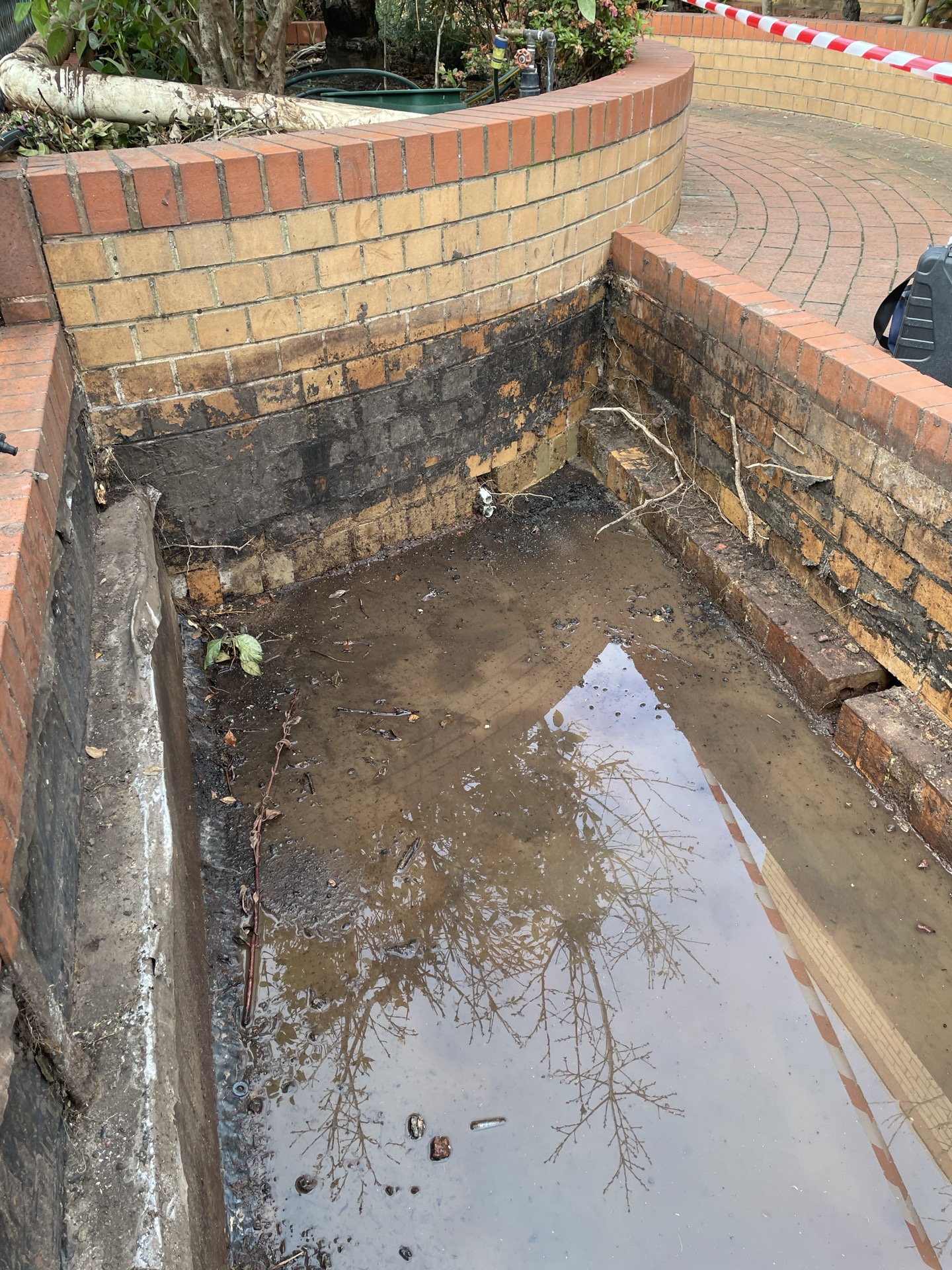
At a residential apartment complex in South Yarra, a large 42m² external planter box had suffered a complete membrane failure. The planter box sits adjacent to a basement carpark, meaning trapped moisture and irrigation runoff were penetrating the concrete slab and leaking into the subterranean level below.
Symptoms identified
- Active carpark water ingress: Water was tracking from the planter box into the car park walls, posing an ongoing risk of concrete spalling (often referred to as ‘concrete cancer’), and potential damage to resident vehicles.
- Sub-surface hydrostatic pressure: The adjacent footpath was facilitating the flow of groundwater through the brickwork to the planter box, creating severe negative-side hydrostatic pressure.
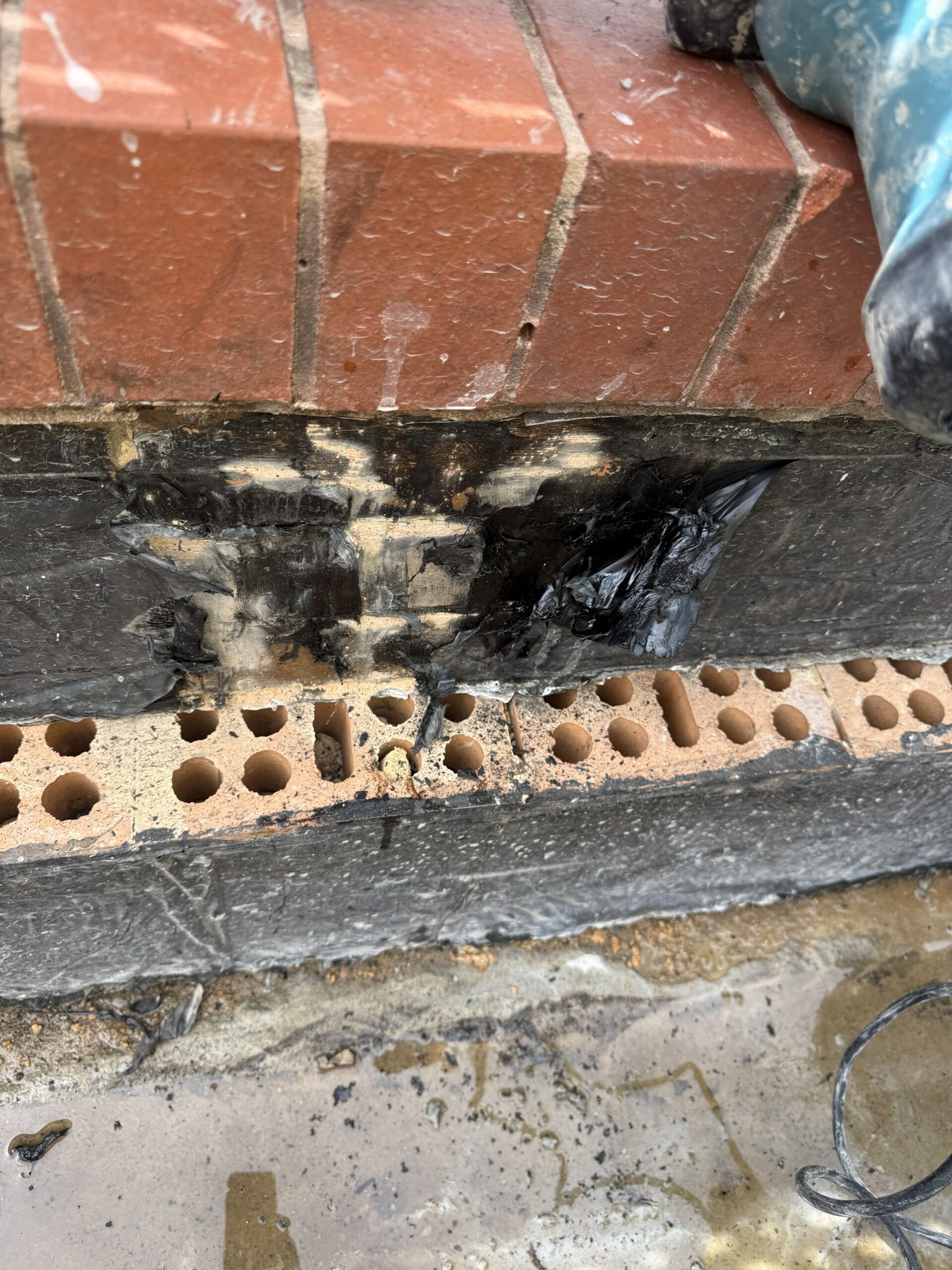
- Degraded torch-on membrane: The original sheet membrane had deteriorated, debonded, and lost its watertight seal, requiring us to fully strip it down to structural masonry and concrete.
Our Remediation Process
Our solution was a permanent, watertight repair to protect both the planter structure and the adjacent carpark. We coordinated preparation, substrate strengthening, and multi-stage membrane installation from start to finish.
Recommended solution
Strip the failed torch-on membrane back to bare masonry and seal hydrostatic walls with Xypex crystalline barriers. Install a two-stage Gripset C1P liquid membrane system over a precision 1:80 screed, finished with Pasco drainage cell and wall protection boards.
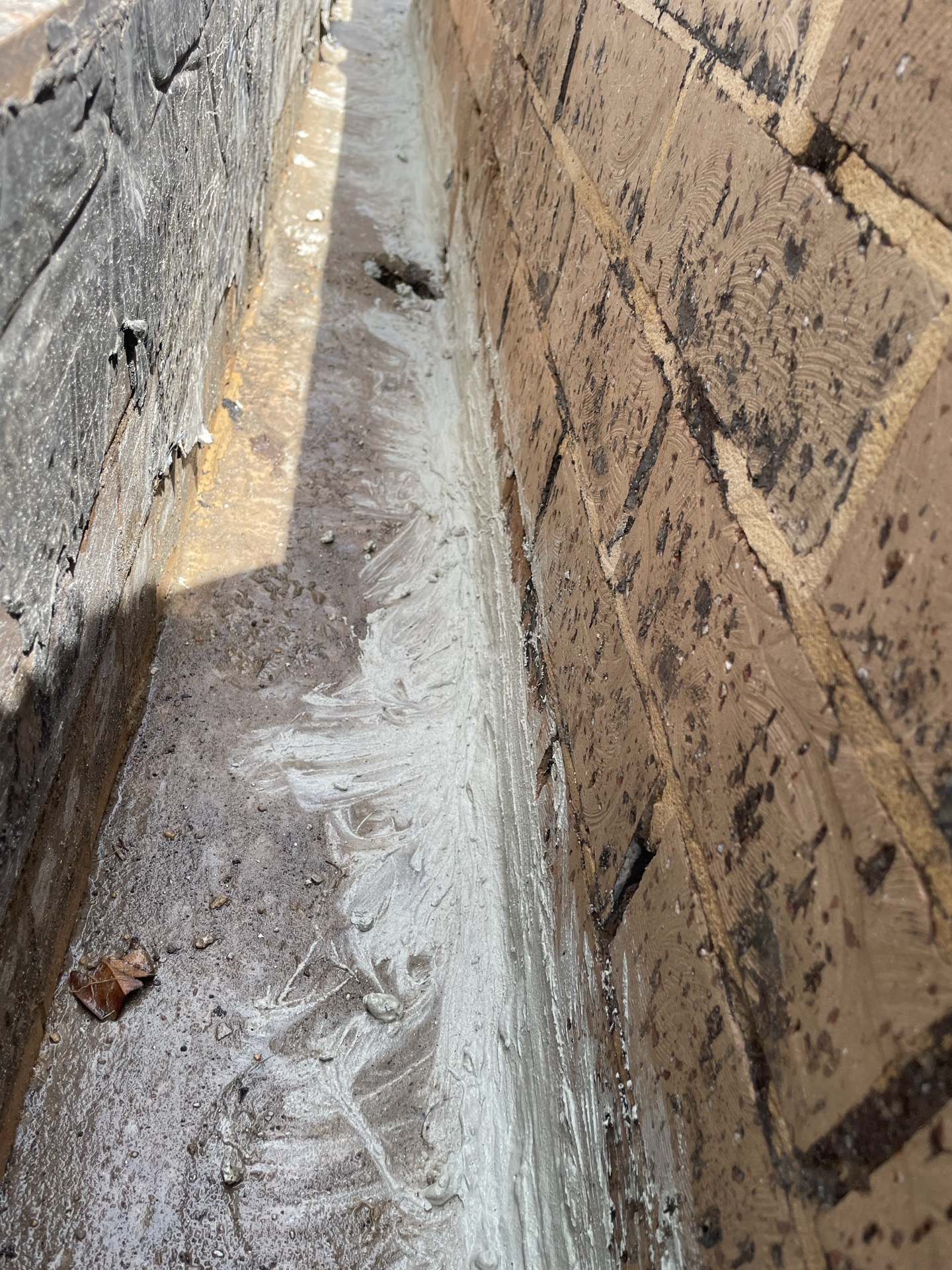
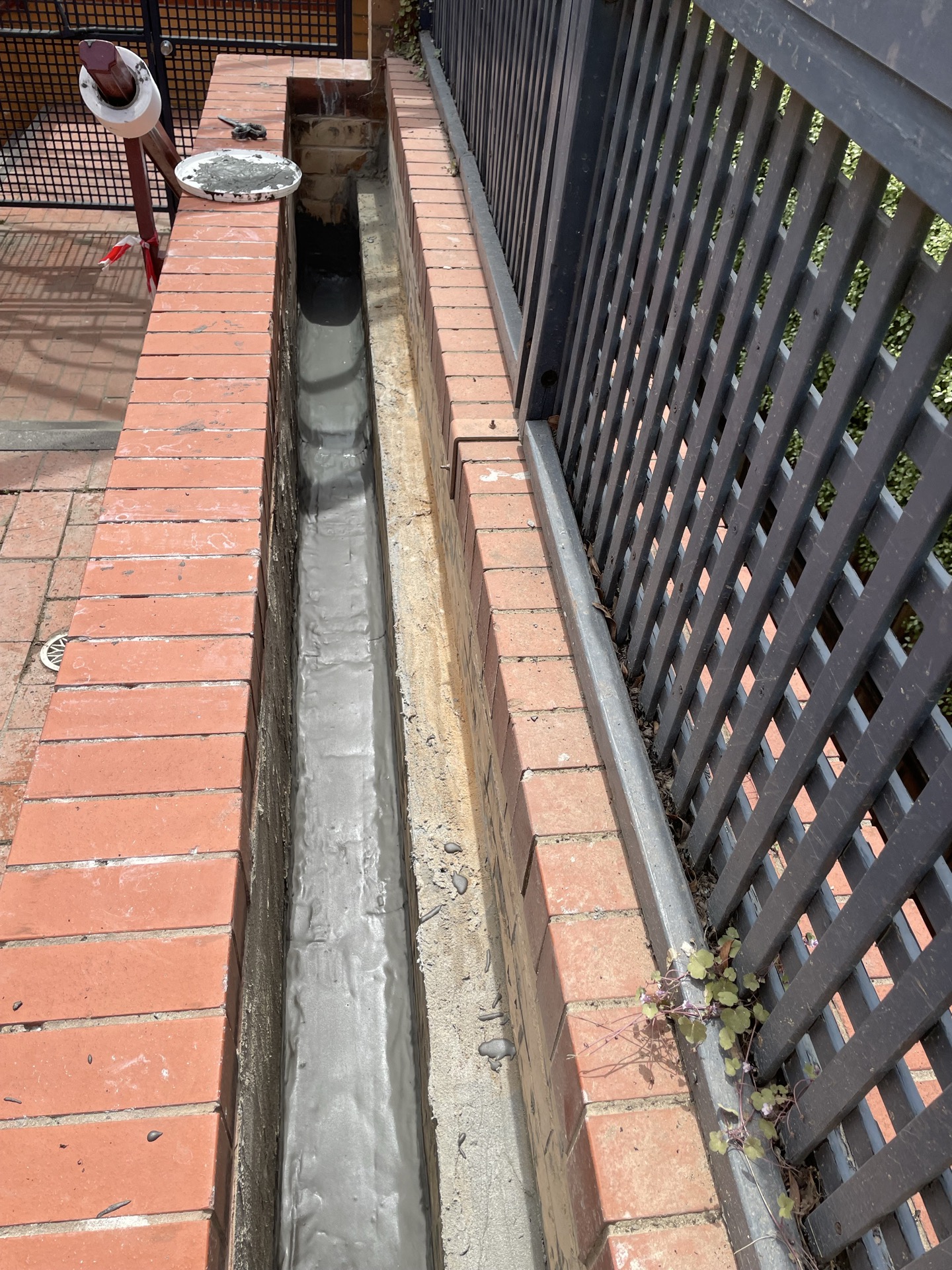
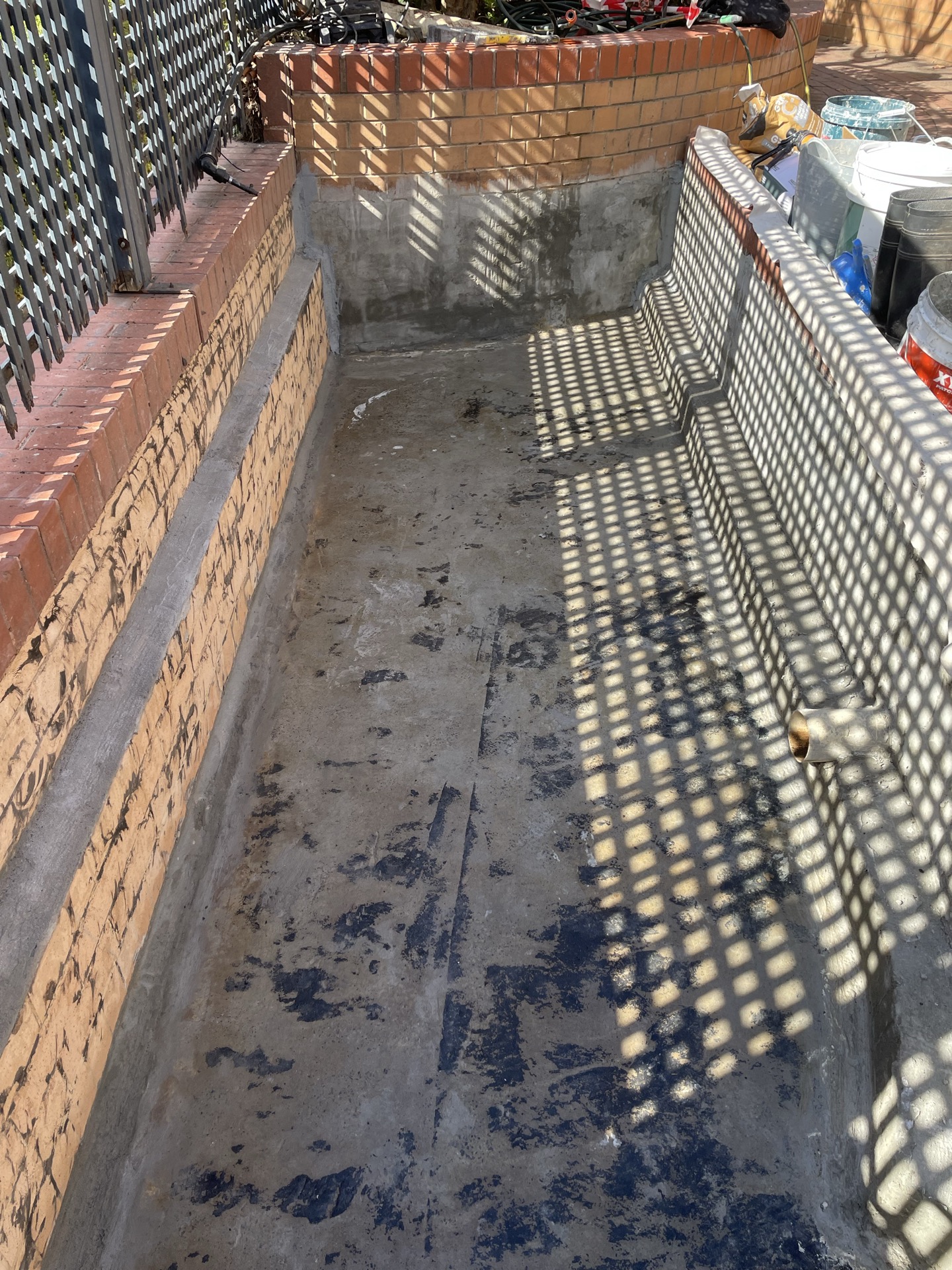
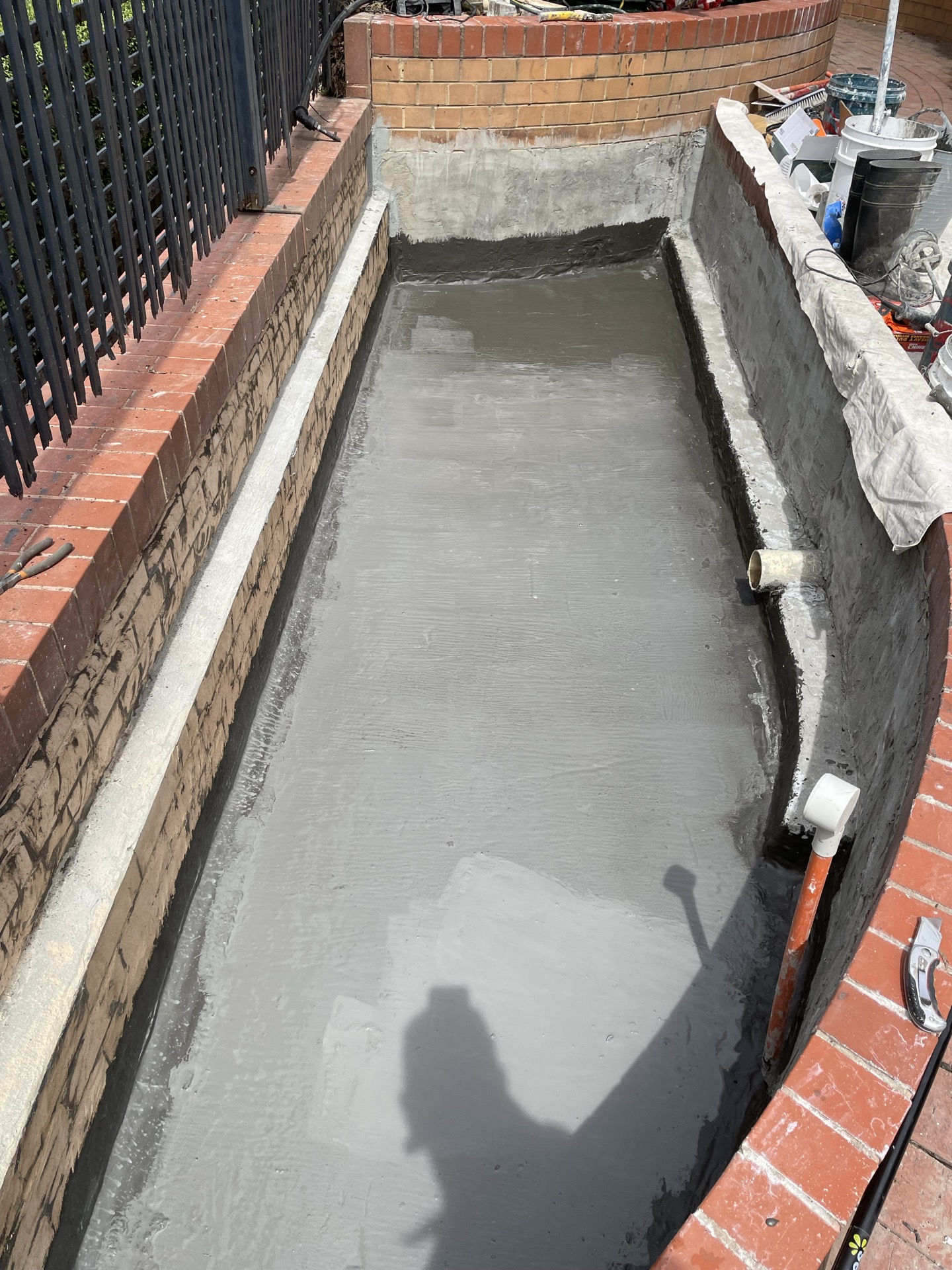
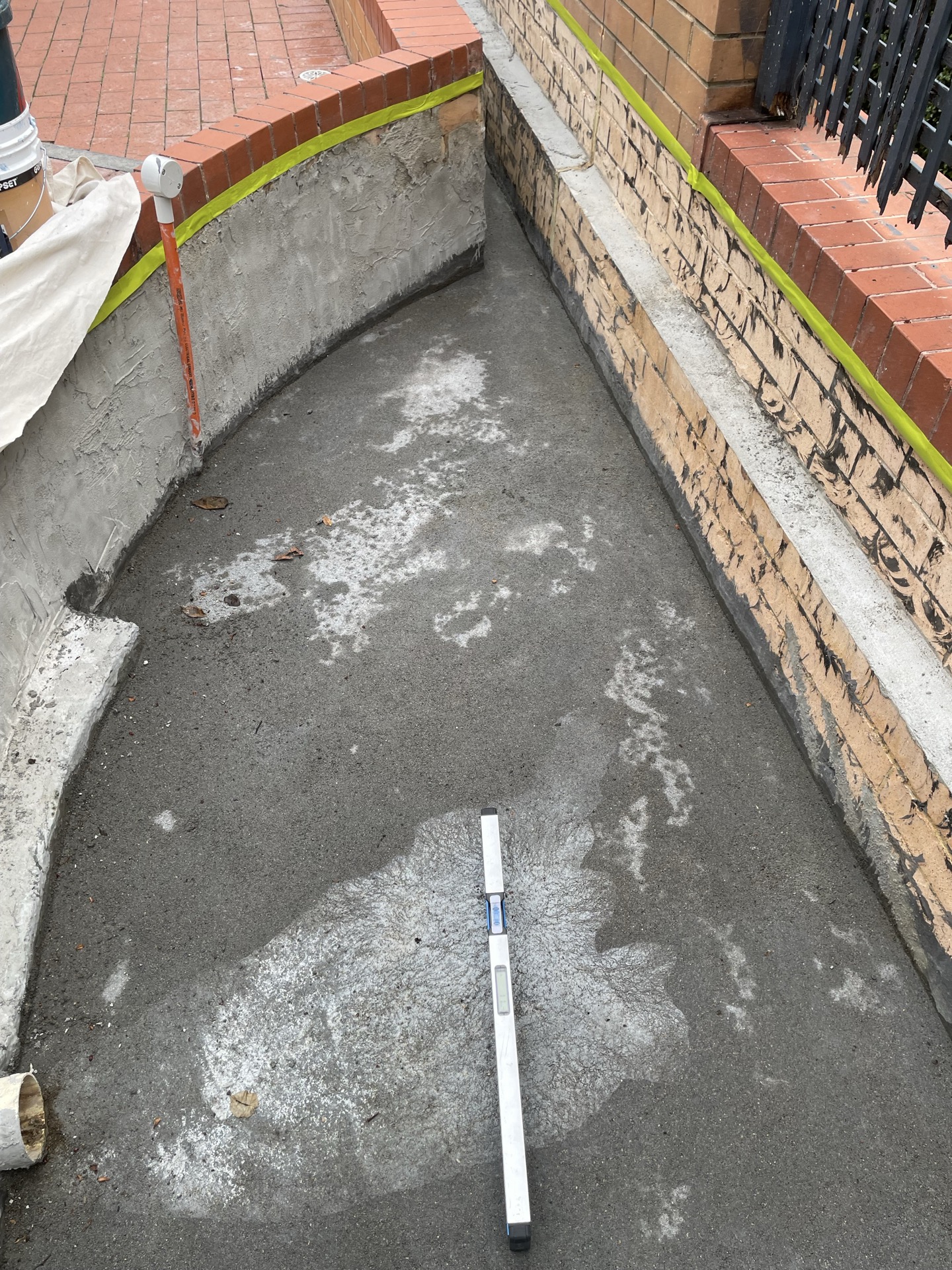
1. Excavation, Service Isolation and Mechanical Stripping:
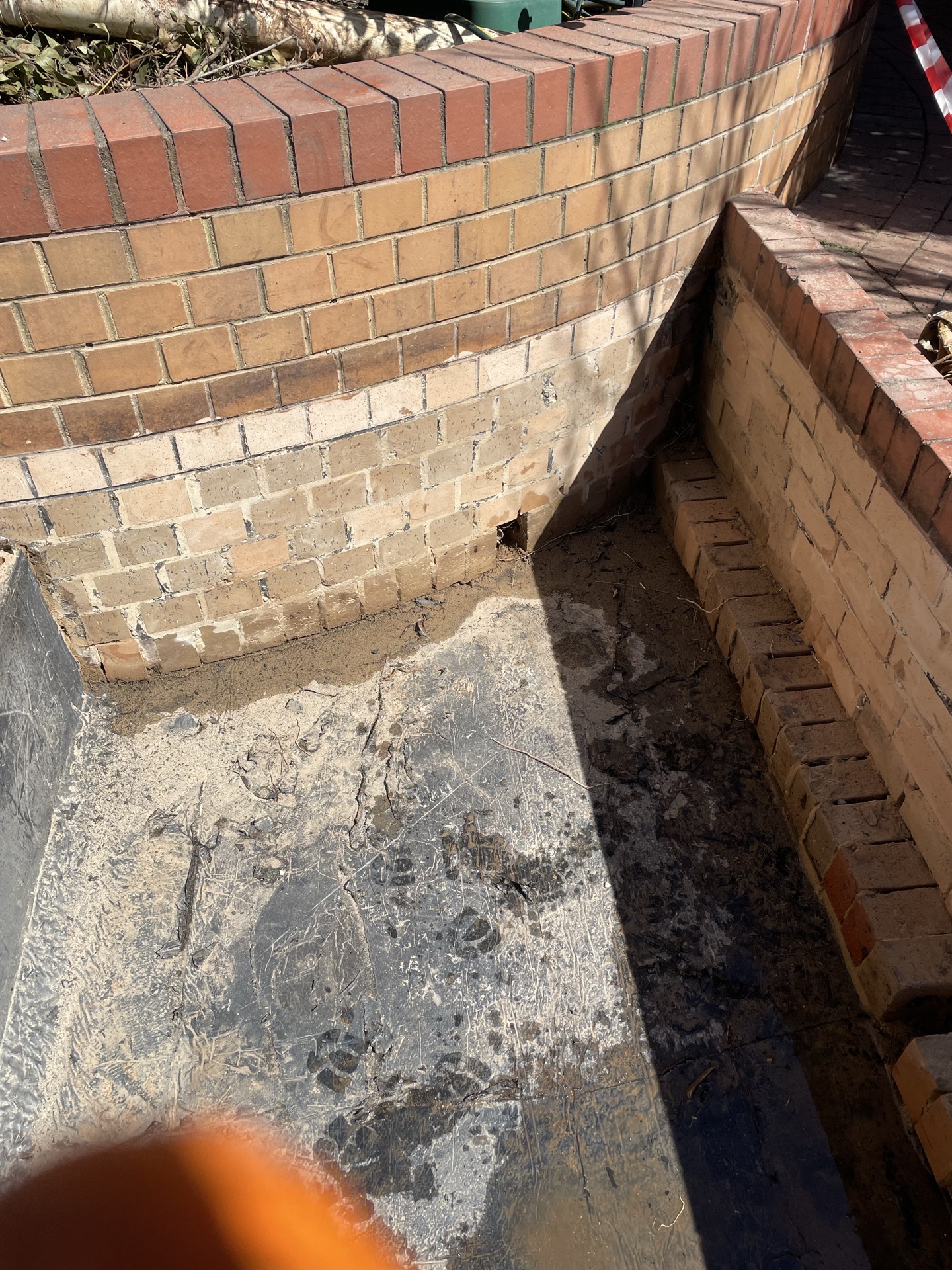
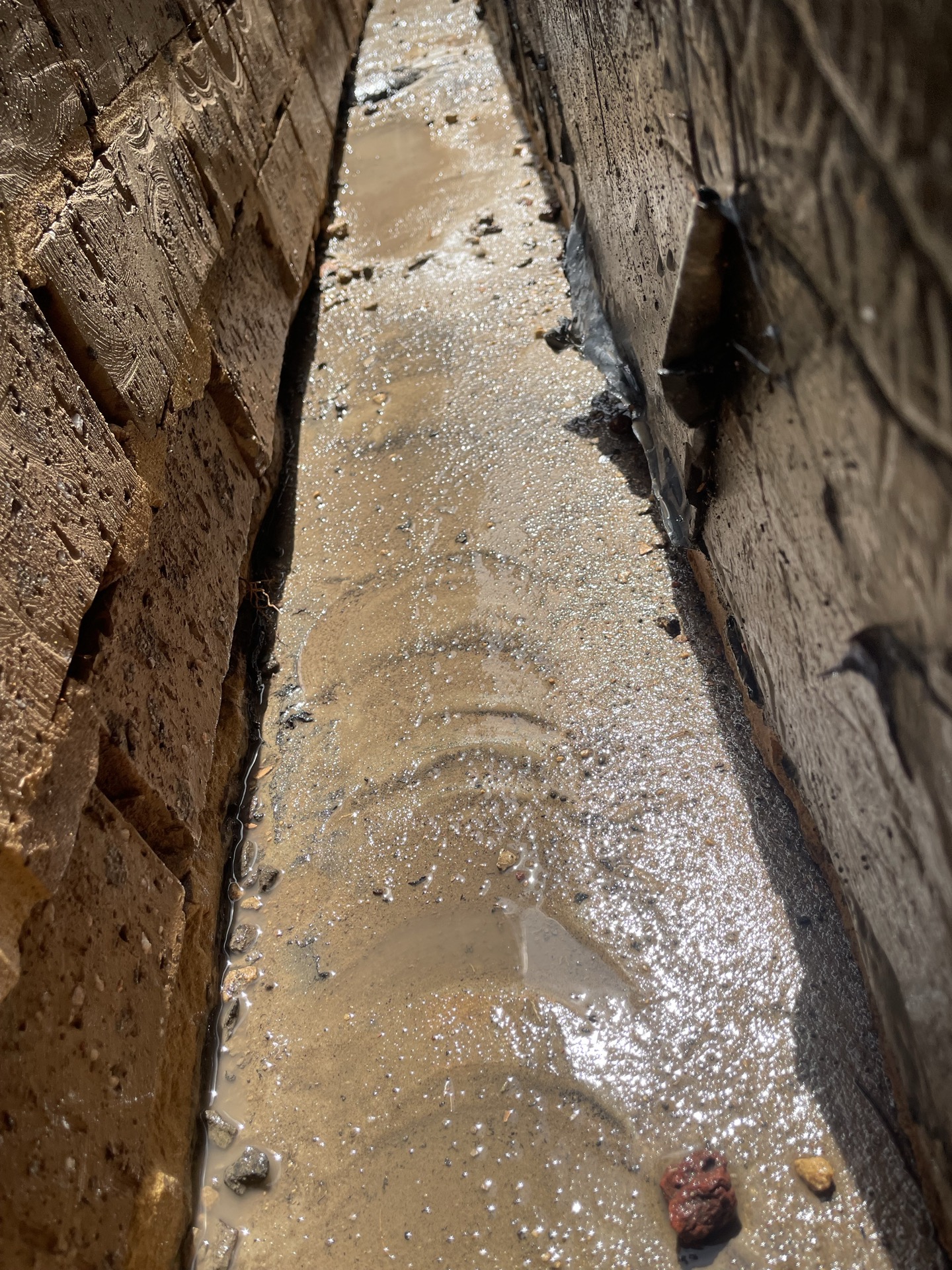
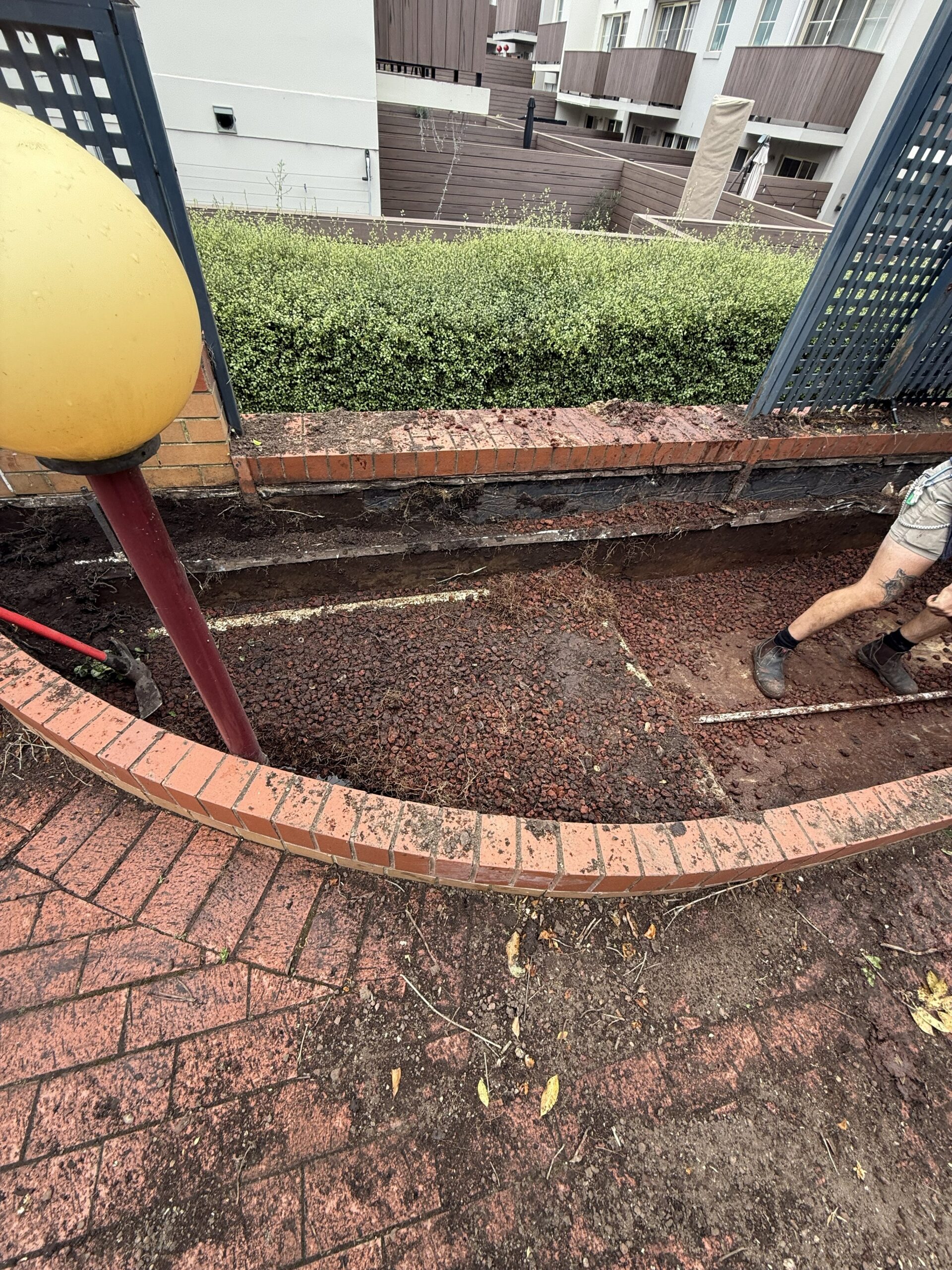
Before waterproofing, a landscaper excavated the soil and plants, and a plumber isolated and disconnected the irrigation sprinklers, allowing us access to the root cause of the issue. Our team then prepped the 42m² area to strip away the entire failed torch-on membrane, using jackhammers and industrial dust-extraction vacuums. We then repaired missing or deteriorated mortar across the internal brickwork walls.
2. Crystalline Hydrostatic and Lateral Moisture Barrier:
Standard membranes can separate from the substrate when water pushes through masonry from behind. To combat external moisture coming through the adjacent footpath, we treated the vulnerable walls using Xypex crystalline waterproofing products:
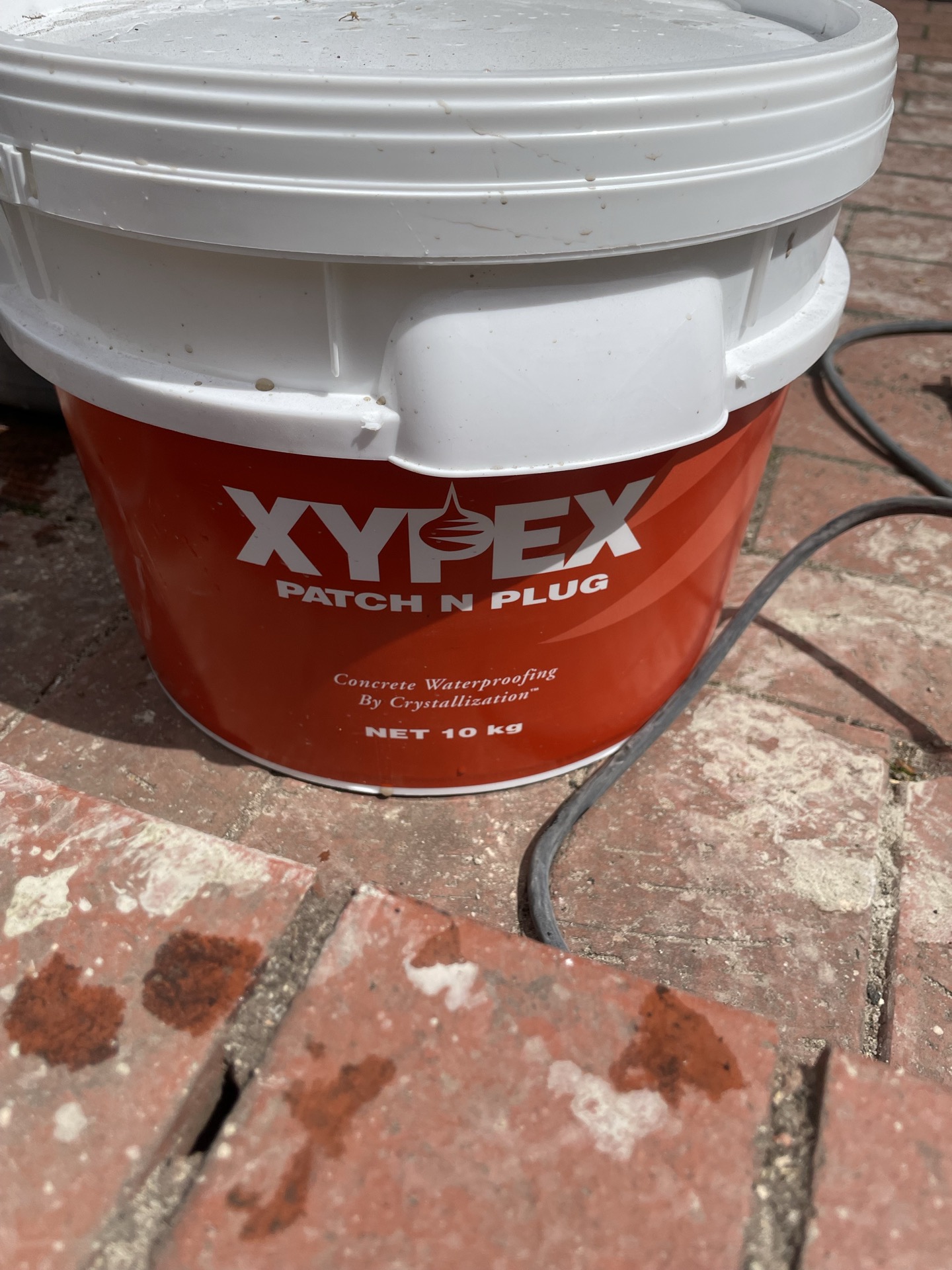
- Xypex Patch’n Plug: Used to seal active moisture entry points, tie-holes, and masonry joints against immediate water seepage.
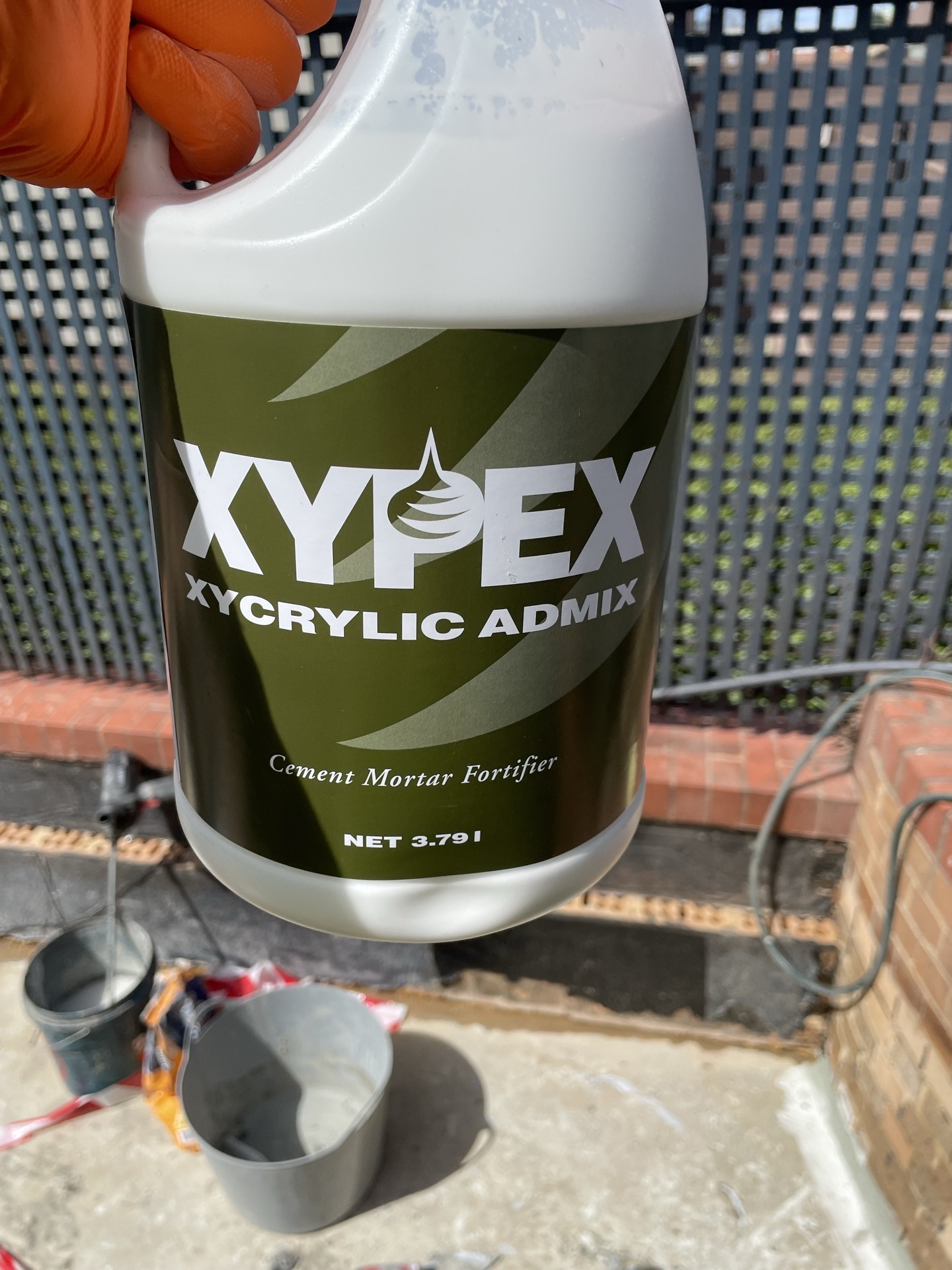
- Xypex Megamix: Applied across the footpath-facing and shared planter walls to form an integral crystalline barrier deep within the concrete and mortar pores, neutralising.
3. Under-Screed Waterproofing
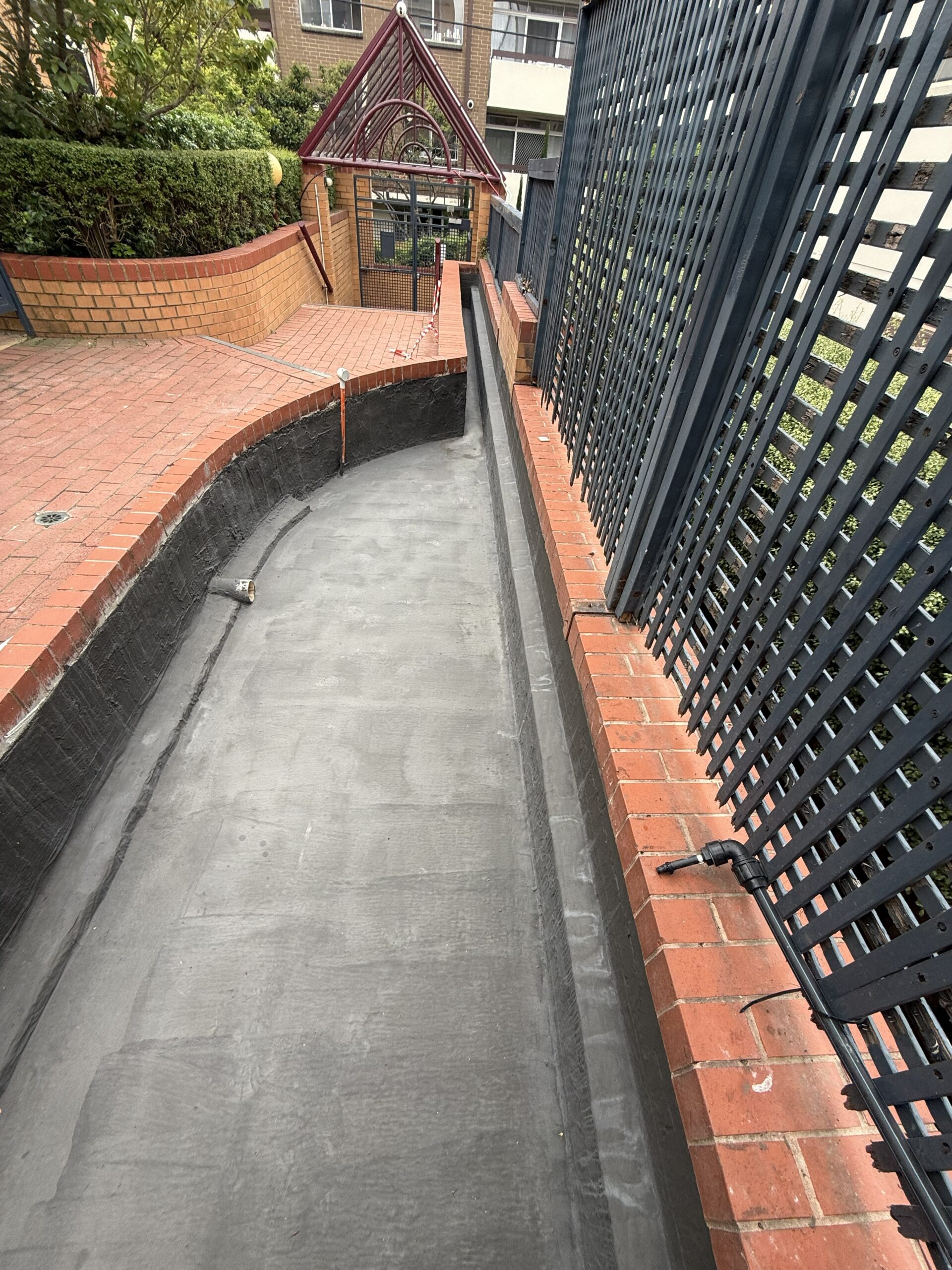
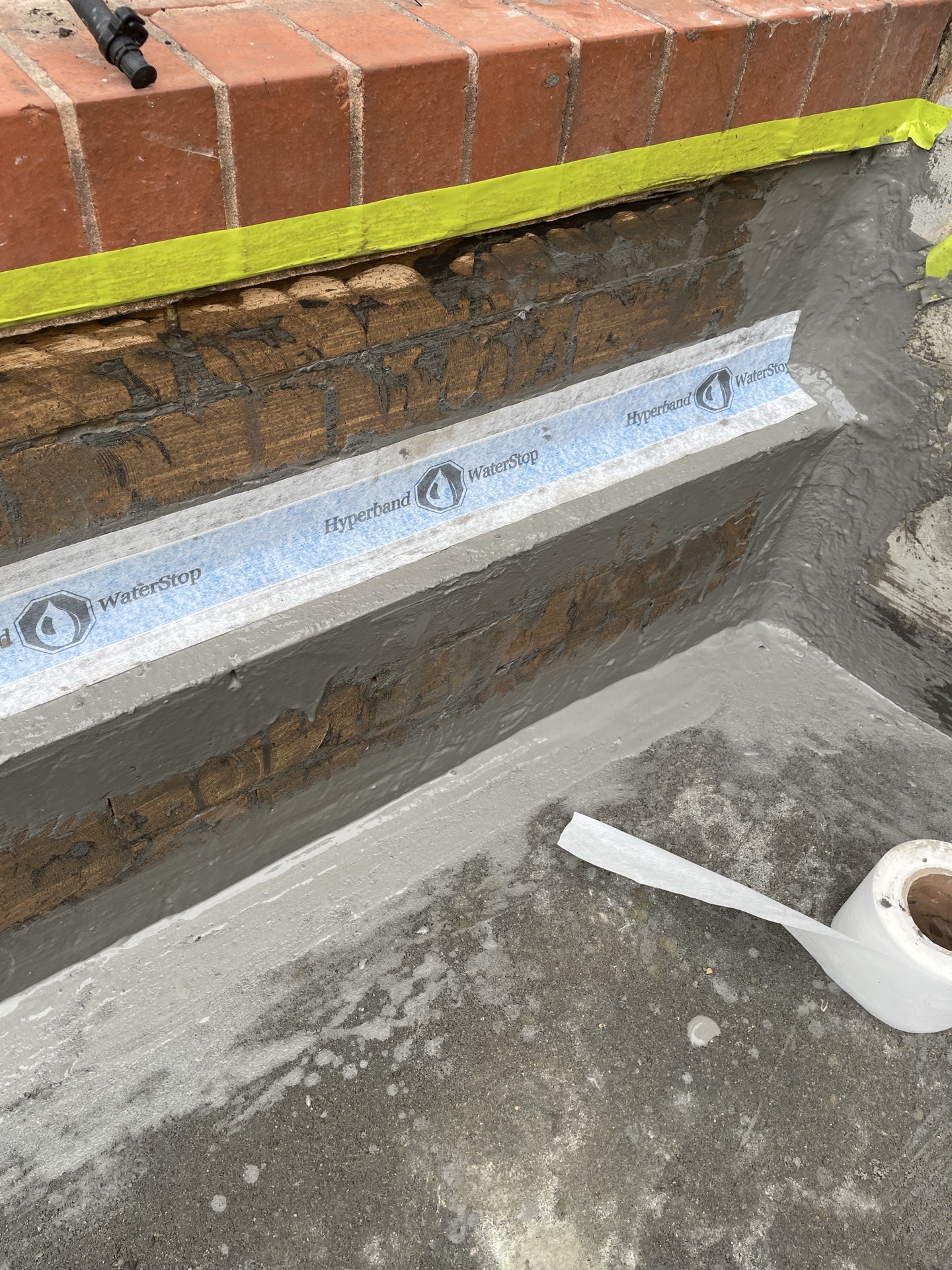
With the substrate stabilised, we sourced our primary waterproofing materials through WaterStop Shop and applied two coats of Gripset C1P directly to the prepared substrate hydrostatic pressure.
4. Precision Screeding for Positive Drainage
Once the under-screed membrane had fully cured, Sharp Tiling installed a precision sand-and-cement screed across the planter base. Engineered to a strict 1:80 fall toward the drainage outlet, the screed prevents water ponding, ensuring excess irrigation and rainwater drain efficiently rather than sitting against the membrane.
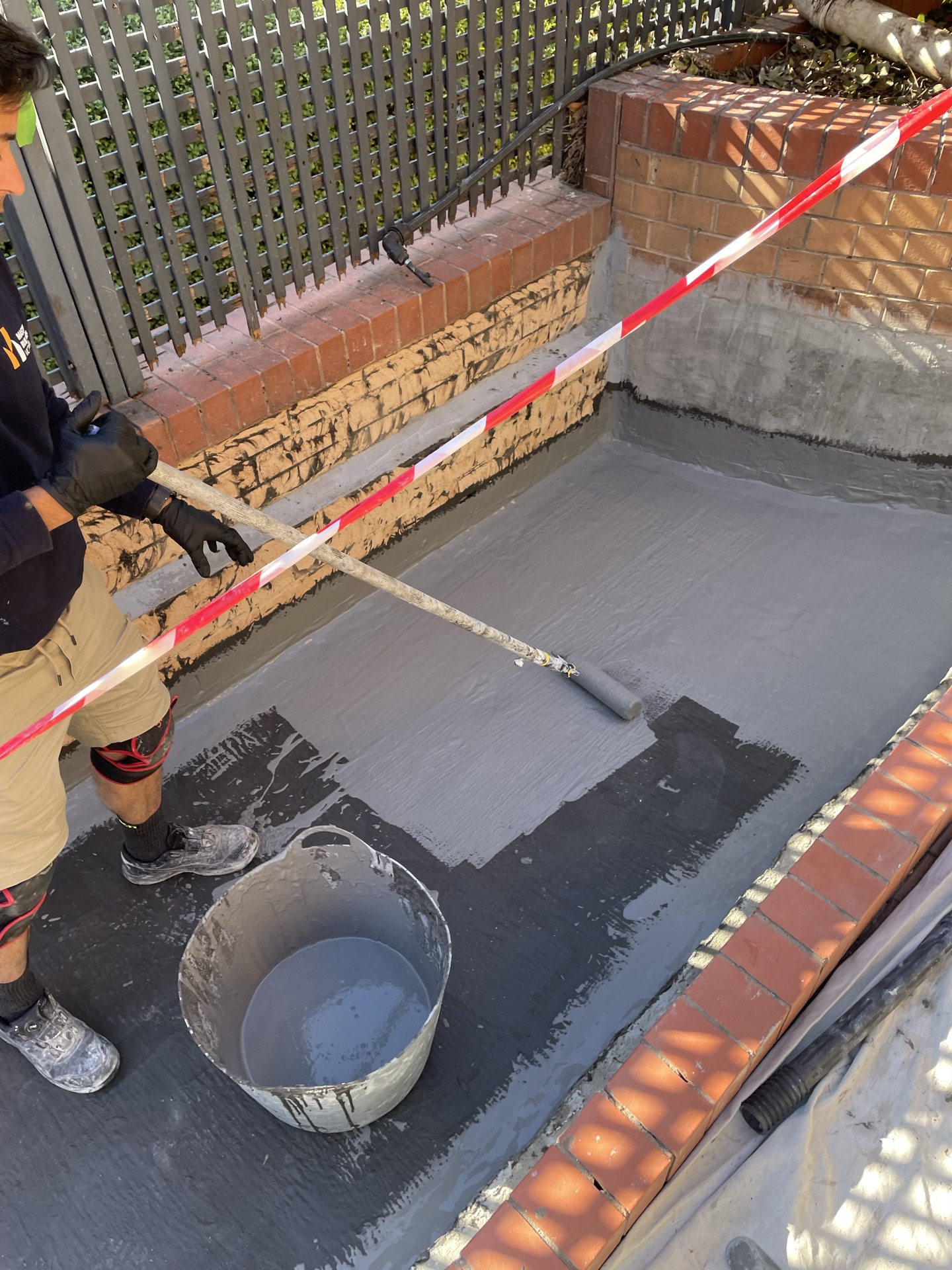
5. Penetration Detailing and Top-Coat Membrane System
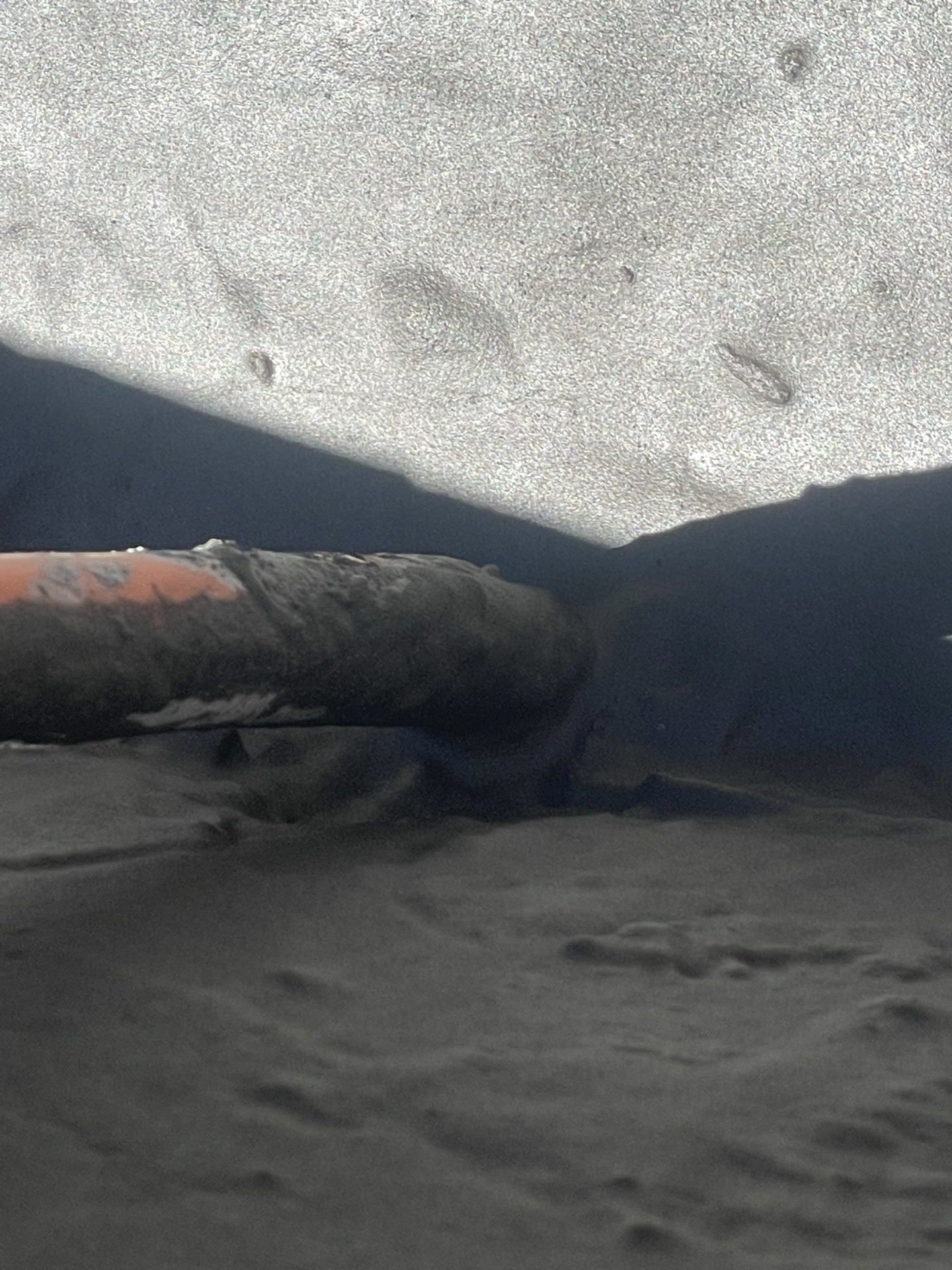
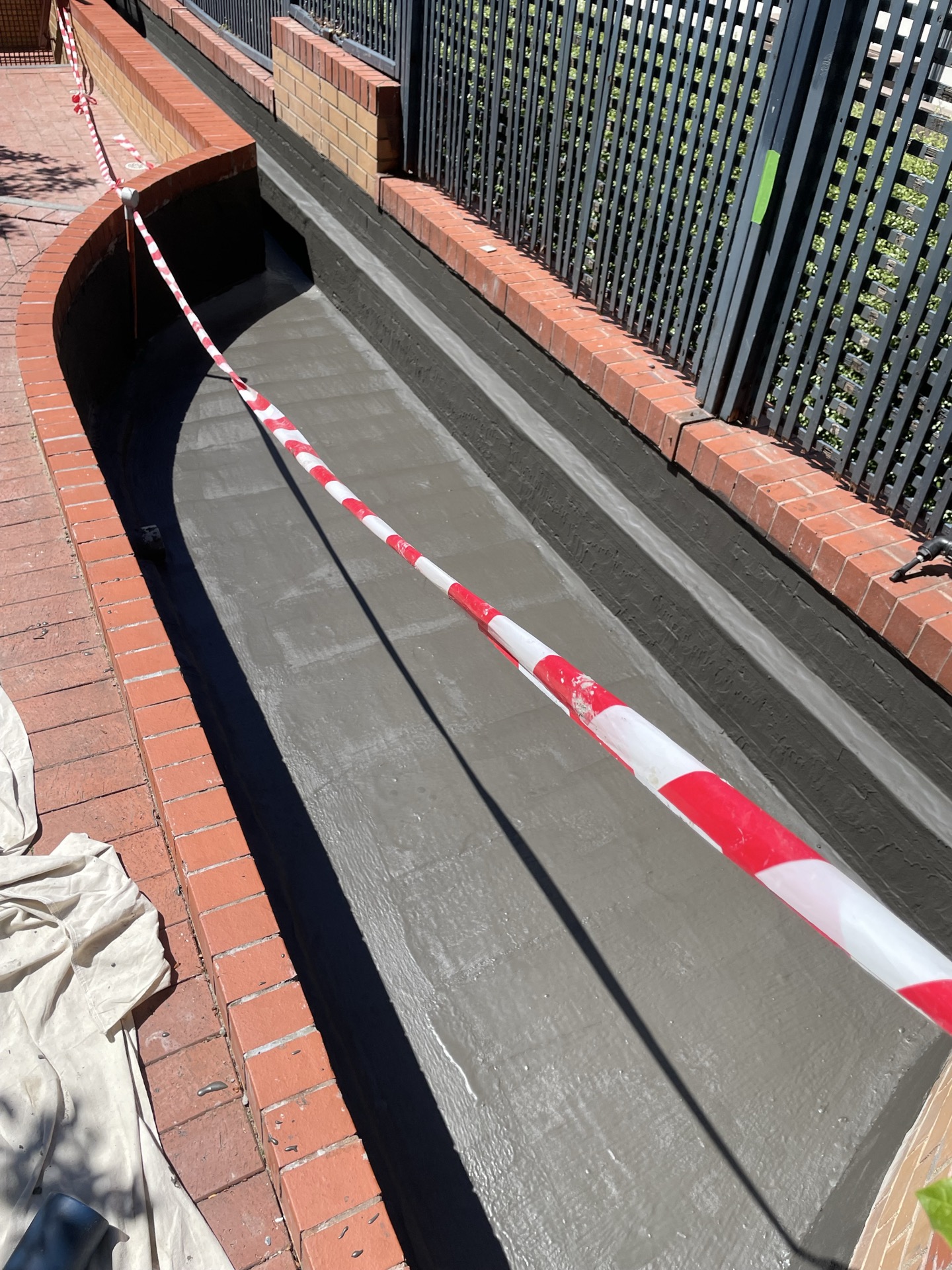
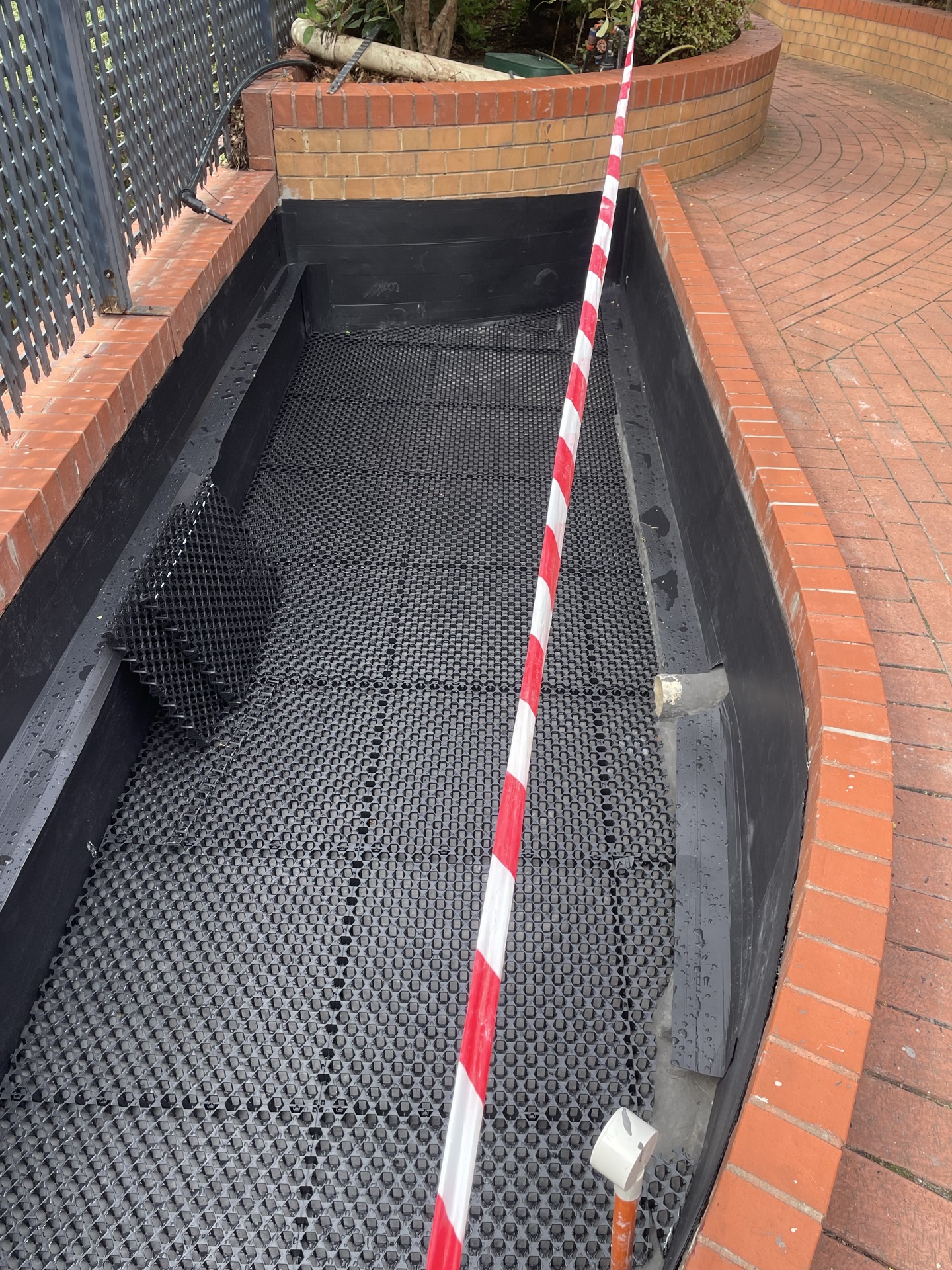
Detail points are the most common failure zones in planter boxes. As seen in the photos, a pipe traversing through the planter box wall was a detail point we needed to address. We installed flexible bond breakers and sealed around every plumbing and drainage penetration. Over the cured screed, we applied three coats of Gripset C1P to build a seamless waterproof barrier.
6. Drainage Cell, Geotextile and Wall Protection
To ensure water has an exit point to drain without damaging the new membrane, we installed a complete protection and drainage system supplied by Pasco:
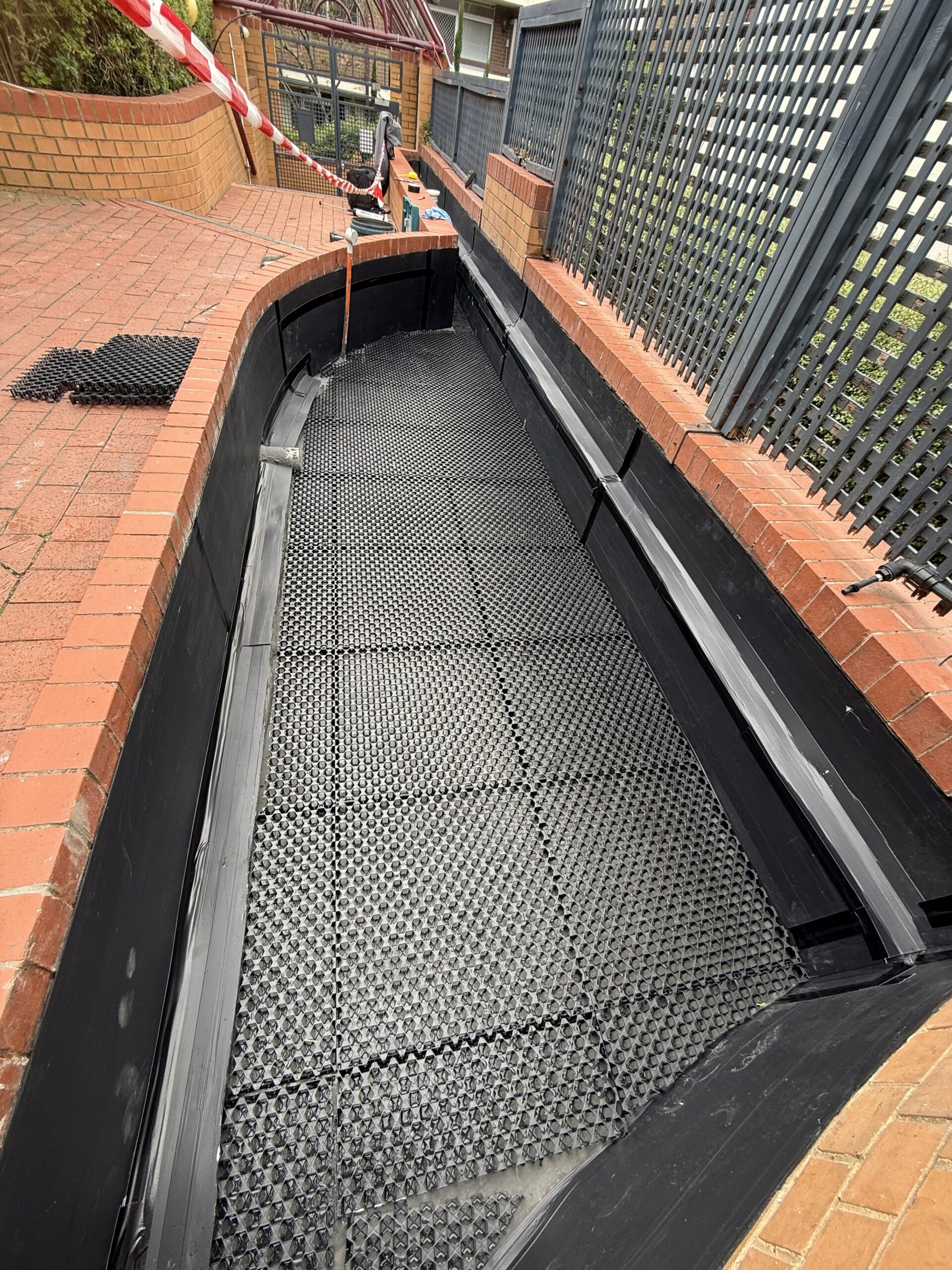
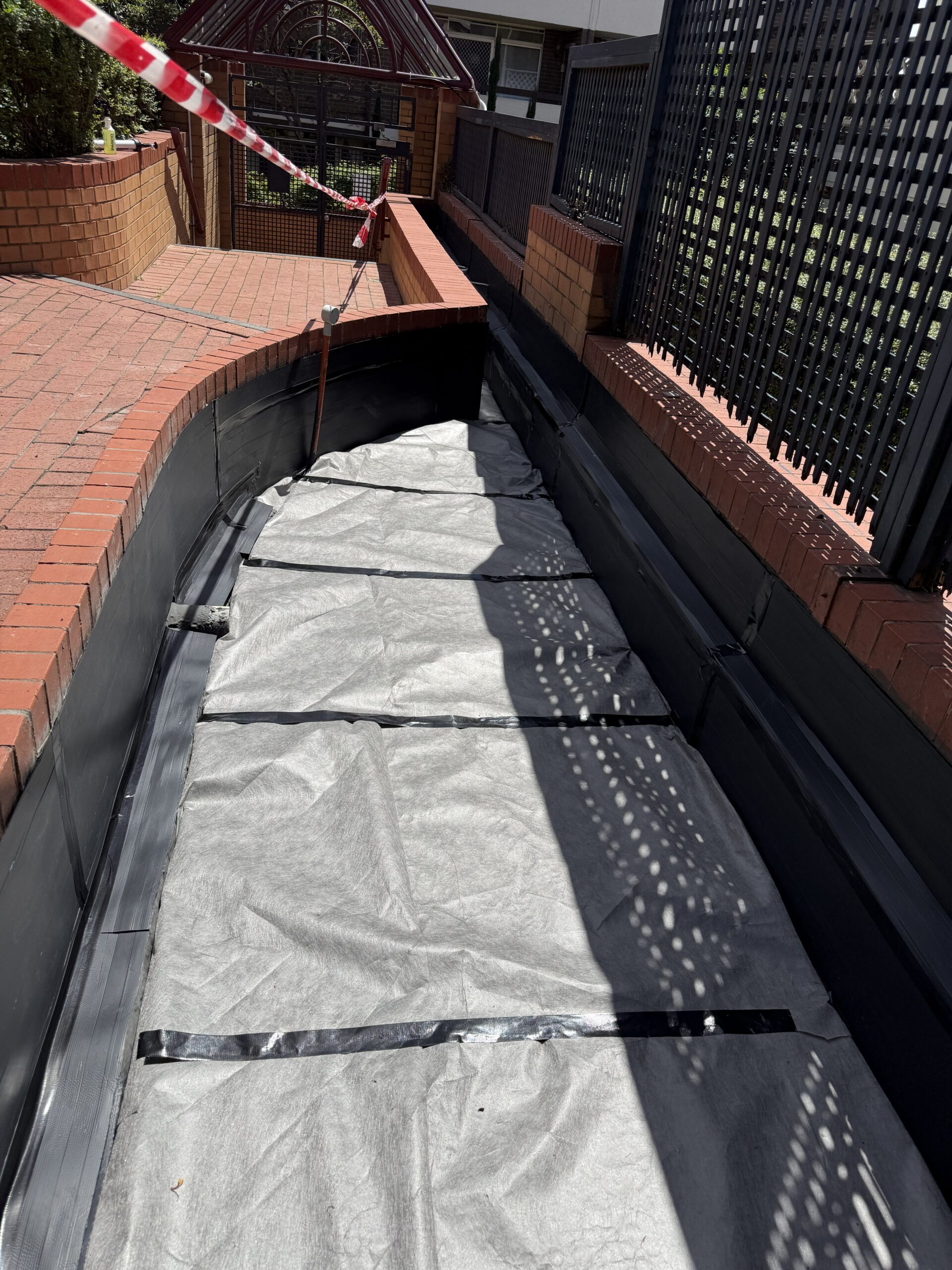
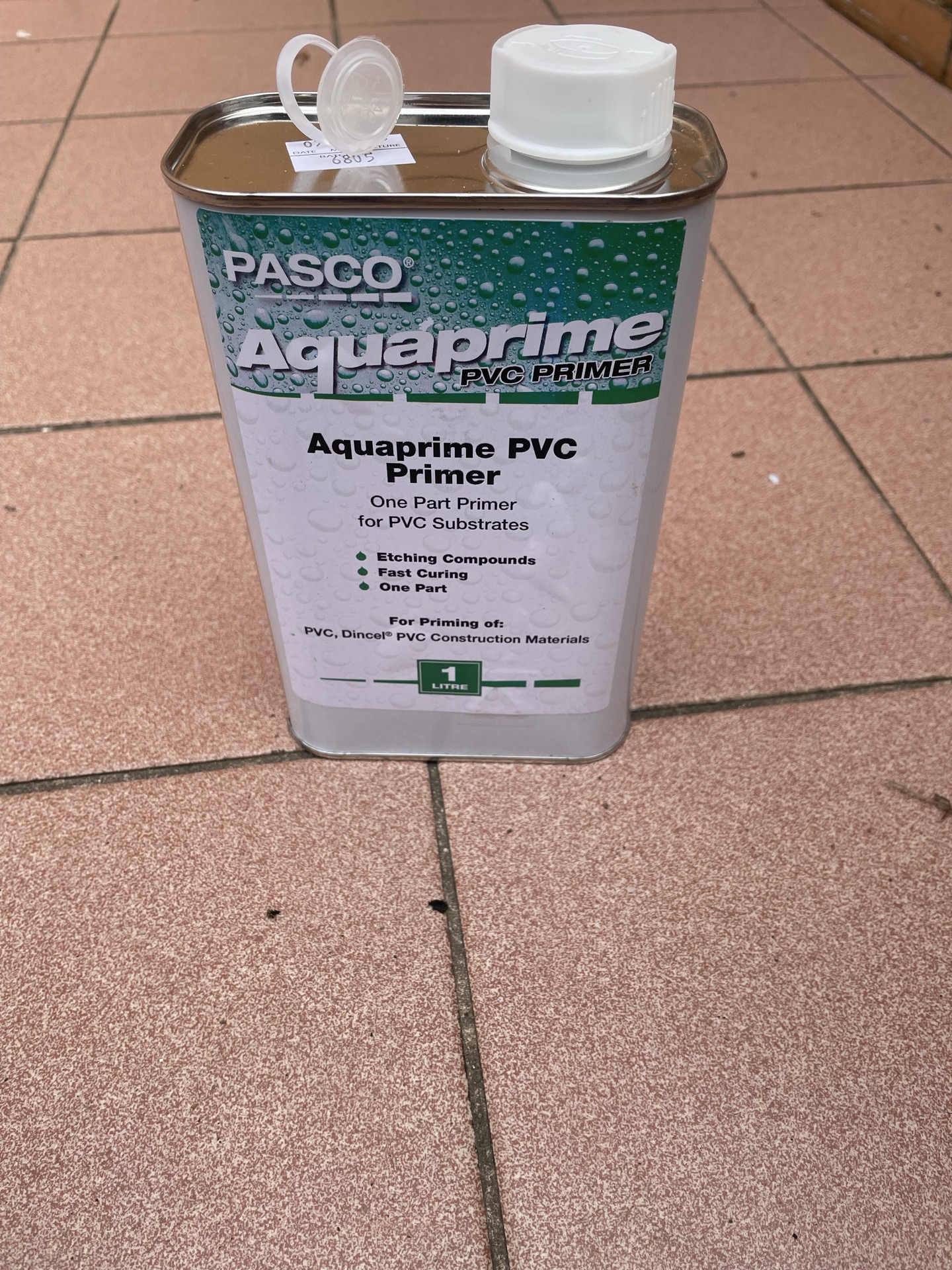
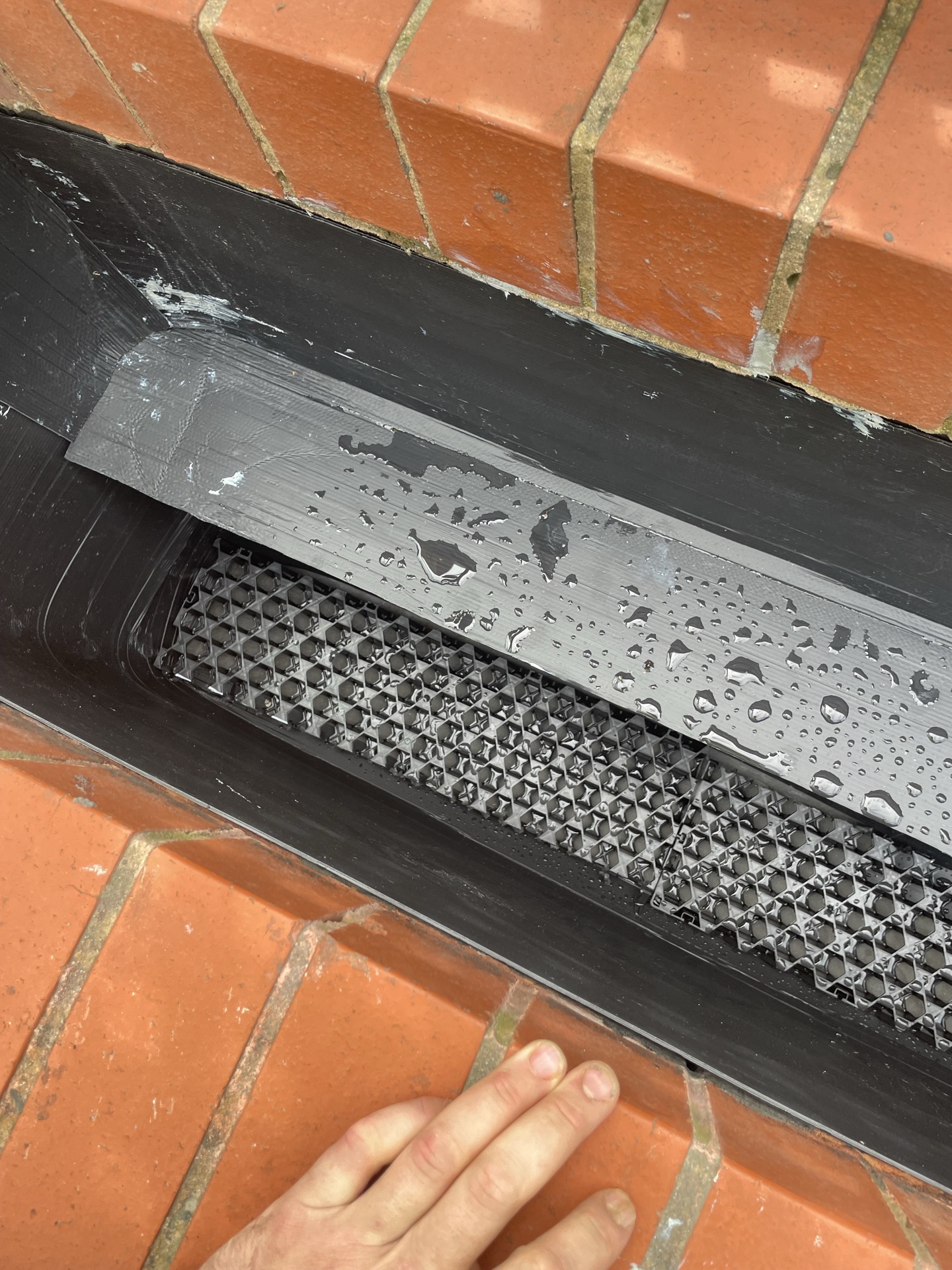
- Floor drainage & filtration: Heavy-duty drainage cell and geotextile filter fabric were laid across the planter base, allowing excess water to flow freely to the outlet while keeping soil and fine silt separated from the membrane.
- Wall protection board: Rigid protection boards were fitted to all internal walls to shield the Gripset C1P membrane from mechanical abrasion during backfilling and future root pressure.
Quality Assurance and Compliance
Planter boxes in multi-residential buildings must meet strict performance criteria under Australian Standard AS 4654.2 (Waterproofing membranes for external above-ground use) to prevent structural damage and strata liability disputes.
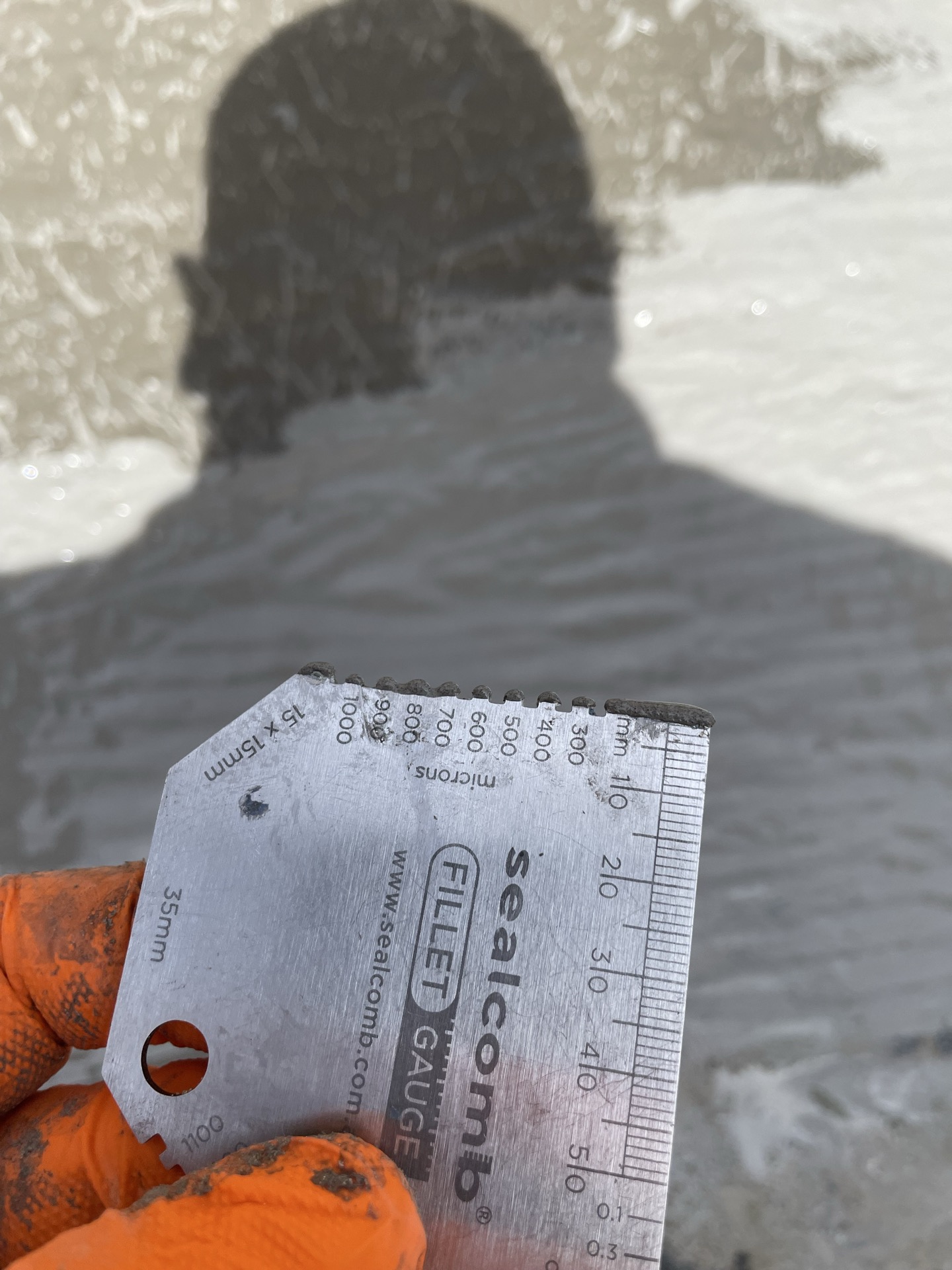
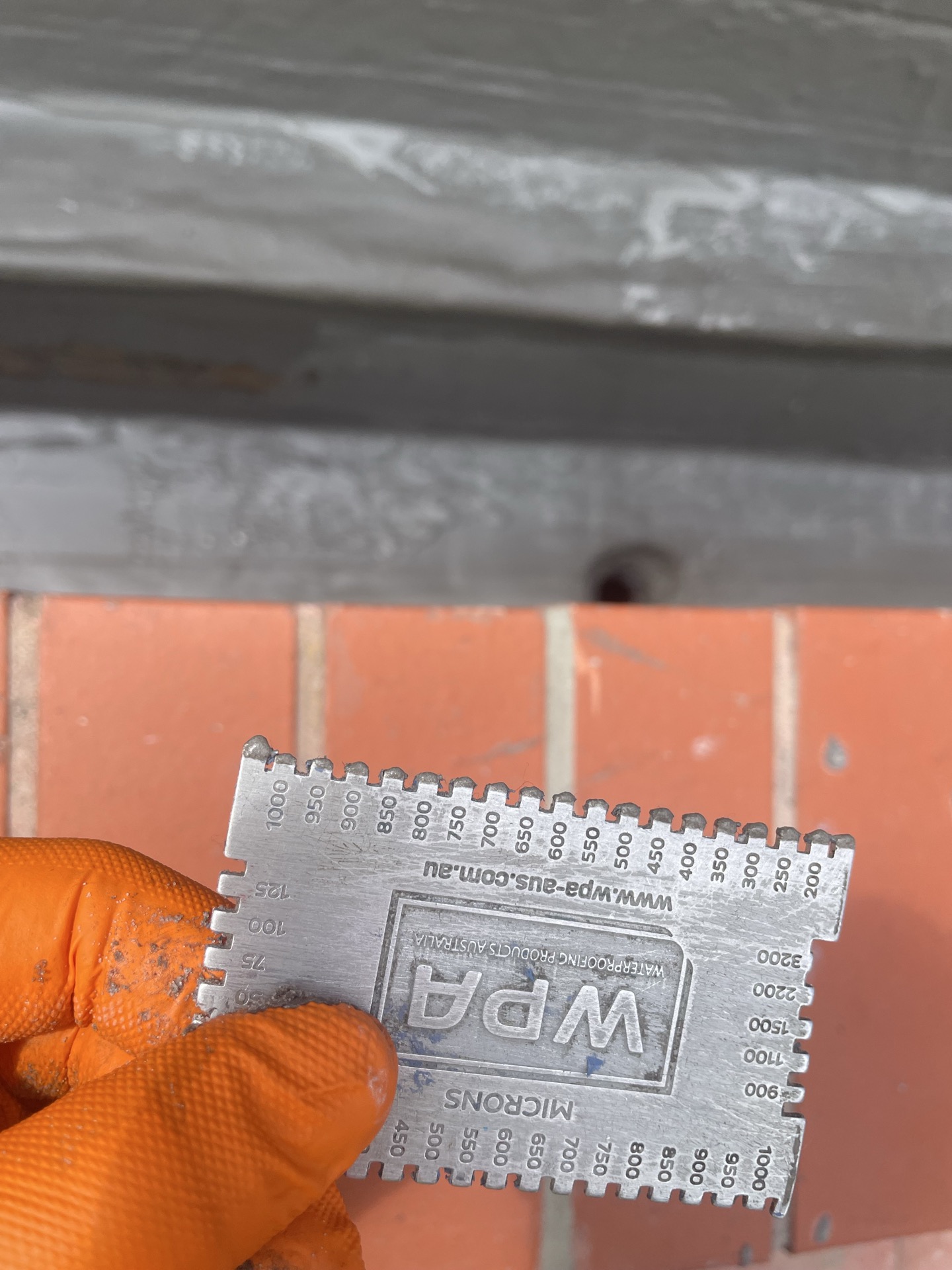
Every stage of this South Yarra remediation—from substrate preparation and crystalline application to wet-film thickness checks, screed falls, and protection board installation—was logged with timestamped photographic evidence using CompliBuild compliance software. This provides the owners corporation and building manager with a complete, auditable quality assurance record and full manufacturer warranty compliance.
FAQs
Why do planter boxes leak?
Planter boxes are exposed to constant moisture. The most common causes of failure include root penetration puncturing aged membranes, inadequate screed falls causing stagnant water to pool, hydrostatic pressure pushing water through retaining walls from adjacent soil or footpaths, and poor detailing around drainage outlets and wall-floor junctions.
What are the early signs of a leaking planter box?
Water dripping or damp patches on ceilings directly beneath planters, white chalky salt deposits (efflorescence) on external planter walls, peeling paint, or unexplained dampness in adjacent areas.
Why apply waterproofing both under and over the screed?
Applying two coats of Gripset C1P beneath the screed protects the structural concrete slab from any moisture that enters the screed bed, while three coats above the screed with a 1:80 fall ensures water drains rapidly into the outlet rather than saturating the mortar bed.
Service: Planter box waterproofing, remedial concrete repair, substrate preparation, and drainage installation
Application: Xypex Patch’n Plug, Xypex Megamix, Gripset C1P liquid membrane, and Pasco drainage cell, geotextile fabric, and protection board
Solution: Full excavation, mechanical removal of degraded torch-on membrane, crystalline hydrostatic barrier treatment, precision 1:80 screeding, dual-layer liquid membrane system, and root/backfill protection
Time to complete: One month
Dealing with a leaking planter box in Melbourne?
See how Schaefer Waterproofing can solve your waterproofing challenges with the same expertise and care we’ve brought to 500+ completed projects. Protect your building’s structural slab and basement levels from costly concrete cancer and water ingress. Contact Schaefer Waterproofing today to book a non-destructive moisture assessment and planter box waterproofing consultation.

Latest News
Stay informed with waterproofing news and updates.
Why waterproofing matters more than ever in Melbourne’s climate
Melbourne's weather has always been famously unpredictable, but recent years have brought new challenges. The changing weather patterns, think this Spring 2025, has put added pressure on already vulnerable waterproofing systems.
Leaking Basement in Melbourne? Rising Water Tables Could Be the Cause
Is your Melbourne basement leaking? Rising water tables in inner-city suburbs like Richmond and Southbank are causing costly structural damage. Discover how hydrostatic pressure impacts foundations and which waterproofing solution is right for your property.
5 major signs of water damage owners corporations should look out for
Early detection of water entry is critical for owners corporations. Minor leaks caught early might cost a few hundred dollars to repair, while extensive damage can easily exceed tens of thousands of dollars. Learn how to spot the signs of water damage.